

Courage, Curiosity, and Life-Long Success
As parents, we’re naturally driven to find the competitive edge for our children. We’re constantly reminded of the fact that the workforce is fluid, getting ever more competitive, and there’s no sympathy for those who can’t keep up. So we fawn over test scores, agonize over the best schools and programs. We drive our children to perform.
We just want what’s best for them, but the results are far from positive. Instead of success, we’re pushing our children to increased levels of depression, anxiety, and the breakdown of their relationships.
We want the best for our kids, but what if we aren’t looking for the right things?
Click here to discover how to choose the right high school for your teen.
Of course it’s important to expose our children to as much information and experience as possible. Education is a notable defense against manipulation and mistreatment. It’s the foundation upon which economic stability can be built. But is it enough to secure our children’s success?
And really, what is success?
What is success? Success is more than money. As a matter of fact, it’s hard to pin down. It’s a little different for everyone. Therefore, really, success is the freedom of mind to create success for yourself as you define it.
That’s a little hard to imagine.
Traditionally, success has been defined by society. Get a job. Buy a house. Start a family. But today, as the world around us becomes increasingly fluid and both options and responsibilities grow and change at break-neck speed, the ability to define and manifest one’s own definition of success is the ultimate measure of success.
The ability to define success in an insecure world is a function of two attributes: courage and curiosity. Success depends on both.
Curiosity. Innovation is the highest currency of today’s economy. But there can be no innovation without curiosity.
Curiosity is the insatiable drive to find answers. There is a difference between solutions and answers. A solution may address the observable result of a problem, but the solution is the end of the road until another problem arises. Conversely, one who seeks answers seeks to understand a problem to the fullest.
Curiosity drives Waldorf graduates to observe, investigate, and understand on a deep level, driving innovation and long-term progress.
In industry, curiosity is the catalyst of systemic growth. Which is to say, curious individuals who continually seek answers and understanding instead of settling on solutions help move entire industries to keep up with changes in the world around them. It’s what makes start-ups rise to the top of the heap in years or even months, and it’s what keeps established organizations from drowning in the torrential sea of change.
Curiosity is important, but what is curiosity without the courage to seek answers and challenge current systems?
Courage. All the skill in the world is useless to the wielder without courage. Without the courage to ask the hard questions, find the answers, present those answers, break out of the mold and challenge the status quo, ability cannot manifest into results.
Courage in leadership is vital to any team or organization. And courageous leadership looks different today. Where being a courageous leader once meant the ability to establish and maintain oneself at the top of a dog-eat-dog pack, today it means empowering everyone to lead with their best skills forward.
An impactful leader isn’t the one who claws their way to the top, it’s the one everyone turns to for advice. It’s the person everyone trusts and relies on. It’s the one who takes the best ideas from all over the organization and weaves them together into the next big thing. All while keeping morale and communication high.
Yes, curiosity and courage are integral component of life-long success. So how do we make sure to develop these in our children.
We don’t have to develop it; we have to protect it.
Waldorf educators believe that every child comes into the world with curiosity and the courage to follow it. We know that when encouraged to follow their curiosity and rewarded for sharing what they’ve learned, children grow into adults who lead fearlessly, define their needs and those of the people who depend on them, and endeavor to succeed in all aspects of their life.
High school is an important time in your teen's development and preparation for a successful future.
Click here to discover how to choose the right high school for your teen.
Come see us in action! Schedule a tool of our high school now!

10 High-Performance Attributes of a Waldorf High School Student
10 High-Performance Attributes of a Waldorf High School Student
And Why They Are Important for Success
Make sure your teen's school prioritizes these traits. Click here to download the high school checklist now!
The world is breathing.
As one, the people in it are lunging forward at a rate faster than ever before. Driven to keep up with constant advancements and innovations in technology and techno-human interaction, the places available in society morph and mutate ceaselessly.
A place in society is foundational to an individual’s wellbeing. And though change happens so quickly today and many struggle with internal turmoil as a result, there are those who seem to thrive in this emerging socio-economic environment. In many cases, they not only adapt but drive change. They seem unphased by the insecurity of changes in their job description, responsibilities, available technology or anything else.
They are not only successful, they thrive. But why?
The attributes of those who bloom in today’s fluid world are simple, but must be cultivated early in life and tested in the teen years. Waldorf education is designed to not only educate, but enhance the development of the whole child. As a result, Waldorf educated students emerge from high school with these ten high-performance, highly demanded attributes.
Empathy. Empathy is not just for counselors, teachers, and therapists anymore. Today, empathy is a basic life skill that can be neither overlooked compensated for. As automation becomes an ever more present in our daily interactions, the ability to relate to each other on a deep level becomes increasingly important in interpersonal communication.
From sales to medicine; from customer service to engineering, those who cannot empathize, build relationships, and predict need cannot excel in their work.
Academic Confidence. It’s long been understood that confidence, one’s belief in themselves, is the spice of success. However, overreaching confidence can become detrimental when not focused. Academic confidence is specific. Waldorf high school students are challenged to learn that they can learn. They leave high school confident in their ability to identify problems and investigate solutions.
Curiosity. Innovation is the currency of today’s economy. But there can be no innovation without curiosity.
Curiosity is the insatiable drive to find the answers. There is a difference between solutions and answers. A solution may address the observable result of a problem, but the solution is the end of the road until another problem arises. Conversely, one who seeks answers seeks to understand a problem to the fullest. Curiosity drives Waldorf graduates to observe, investigate, and understand on a deep level, driving innovation and long-term progress.
Experience. What is experience, and how can teenagers get it? Experience is failure. For many parents, it’s just so difficult to let our children fail. We want to spare them the pain. We fear failure will hurt their confidence. We believe the road to success is paved with achievement. It’s not until college or even later, when our children fail for the first time in their lives, that we discover we failed to prepare them to recover and learn from their mistakes.
In high school, youth are driven to make sense of the world. They build the assumptions and belief they’ll take with them into the rest of their lives. Experience, particularly the experience of overcoming failure, helps young people develop into resilient adults.
Personal Development. Before adulthood, personal development is a physiological function of growth. Later, however, we must actively and consciously endeavor to continue growing toward our best selves.
Waldorf education prepares graduates to strive continuously toward personal growth and development. They’re challenged not only to examine the world around them, but the world within them. And they career this ability into the rest of their life.
Holism. Holism is a philosophy which presumes that parts of a whole are intimately interconnected. But it’s not just a philosophy, holism is a way of life. Waldorf education teaches students to explore the interconnectedness of the world, which develops into a deeper understanding of the systems that move the world.
A holistic mindset is vital to an individual’s wellbeing. Recognizing the interconnectedness of internal systems empowers an individual to truly understand and serve themselves, promoting resilience and true health.
Self-direction. In a world where change is the only thing we can count on, it’s not enough to wait for instructions. To be successful, one must be able to assess circumstances and direct their own actions. This is so not only for employment, but for life.
A self-directed individual can look beyond the norm to piece together a fulfilling life for themselves based on their own needs and joys. These are the individuals who are least susceptible to mental illness and spiritual fatigue.
Make sure your teen's school prioritizes these traits. Click here to download the high school checklist now!
Intrinsic Motivation. How do we determine which actions have value, and which do not? How do we prepare our children to do the right thing, to follow the difficult path even when there is not measurable reward on the other end?
We empower them to motivate themselves.
Where behaviors motivated extrinsically depend on a clear and measurable reward offered from another party, intrinsic motivation comes from within. Those who are intrinsically motivated, who develop the ability to motivate their own behavior, are more consistent in their pursuits, and therefore more successful long term.
Problem Finding. Problem solving is important, but those focused on problem solving can’t get ahead. When change occurs as rapidly as in today’s world, problem solvers take a back seat to problem finders.
Problem finding is a profound skill. The problem finder can envision a topic, examine it from many angles, and preempt problems that may arise. Problem finders can test solutions before implementation, resulting in change that promotes greater cohesion. They excel at assessing concerns in both tangible and intangible circumstances, making them driving innovators and more compelling communicators at once.
Courage. All the skills in the world are useless without courage. Without the courage to ask the hard questions, find the answers, present those answers, break out of the mold and challenge the status quo, ability cannot manifest into results.
Don't miss a thing on your high school tours. Download the high school checklist and take it with you.
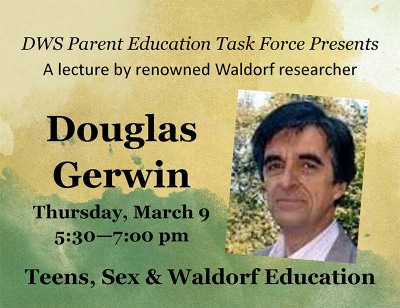
Douglas Gerwin - Teens, Sex & Waldorf Education
The Denver Waldorf School is honored to host renowned Waldorf researcher and author Douglas Gerwin for his lecture Teens, Sex and Waldorf Education. This is one event you don’t want to miss, but to attend you must reserve your spot in advance. RSVP below by Monday, March 6 for the lecture and childcare.
- RSVP Deadline: Monday, March 6
- Lecture Date: Thursday, March 9
- Time & Location: 5:30-7pm at DWS
- Childcare: Available for a fee with reservation

About Teens, Sex & Waldorf Education
Teens, Sex & Waldorf Education is a potent thought-provoking lecture inspired by Dr. Gerwin’s recently published book Trailing Clouds of Glory—Essays on Human Sexuality and the Education of Youth in Waldorf Schools. This book has been twelve years in the making, but you can glean insights on parenting today’s teens in this valuable 90-minute lecture. Not a parent to teenagers? Parents of children of all ages are welcome and will greatly benefit from Dr. Gerwin’s wisdom as he is a highly acclaimed lector in the DWS community and beyond.
About Waldorf Expert Dr. Douglas Gerwin
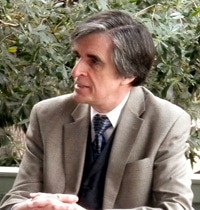
Dr. Douglas Gerwin is a thought-leader in the Waldorf world and renowned expert on teaching teens in alignment with Rudolf Steiner’s philosophy on education. He serves the Center for Anthroposophy as the Director, High School Program Chair and member of its Pedagogical Advisory Council for which prepares high school teachers for the classroom and is a guest teacher and adviser to some 40 Waldorf high schools in the United States and abroad. He is also the Executive Director of the Research Institute for Waldorf Education.
Dr. Gerwin has taught history, literature, German, music and life science at the college and high school levels for some 35 years. He has also either co-authored or edited nine books on Waldorf education, including Survey of Waldorf Graduates, a comprehensive study of Waldorf alumni spanning more than 60 years.
In addition to being active as a high school and adult education teacher, Dr. Gerwin is a Waldorf graduate and endeared supporter of The Denver Waldorf School.
RSVP For Dr. Gerwin’s Lecture by Monday March 6
Dr. Gerwin’s lecture takes place on Thursday March 9, but please RSVP no later than Monday, March 6. Scroll down to the very bottom of this page and confirm the number of attendees in your family. We’ll provide childcare for children ages 4 and older; childcare costs (to be paid directly to the care provider upon drop off) are $10 for one child or $15 per family. All are welcome to this FREE lecture, so please feel free to spread the word.
Need more info? Email questions on the lecture to Admissions Director Brie Kaiser at [email protected] and childcare questions to Carrie Tentori at [email protected].
Douglas Gerwin - Teens, Sex & Waldorf Education
The Denver Waldorf School is honored to host renowned Waldorf researcher and author Douglas Gerwin for his lecture Teens, Sex and Waldorf Education. This is one event you don’t want to miss, but to attend you must reserve your spot in advance. RSVP below by Monday, March 6 for the lecture and childcare.
- RSVP Deadline: Monday, March 6
- Lecture Date: Thursday, March 9
- Time & Location: 5:30-7pm at DWS
- Childcare: Available for a fee with reservation
About Teens, Sex & Waldorf Education
Teens, Sex & Waldorf Education is a potent thought-provoking lecture inspired by Dr. Gerwin’s recently published book Trailing Clouds of Glory—Essays on Human Sexuality and the Education of Youth in Waldorf Schools. This book has been twelve years in the making, but you can glean insights on parenting today’s teens in this valuable 90-minute lecture. Not a parent to teenagers? Parents of children of all ages are welcome and will greatly benefit from Dr. Gerwin’s wisdom as he is a highly acclaimed lector in the DWS community and beyond.
About Waldorf Expert Dr. Douglas Gerwin
Dr. Douglas Gerwin is a thought-leader in the Waldorf world and renowned expert on teaching teens in alignment with Rudolf Steiner’s philosophy on education. He serves the Center for Anthroposophy as the Director, High School Program Chair and member of its Pedagogical Advisory Council for which prepares high school teachers for the classroom and is a guest teacher and adviser to some 40 Waldorf high schools in the United States and abroad. He is also the Executive Director of the Research Institute for Waldorf Education.
Dr. Gerwin has taught history, literature, German, music and life science at the college and high school levels for some 35 years. He has also either co-authored or edited nine books on Waldorf education, including Survey of Waldorf Graduates, a comprehensive study of Waldorf alumni spanning more than 60 years.
In addition to being active as a high school and adult education teacher, Dr. Gerwin is a Waldorf graduate and endeared supporter of The Denver Waldorf School.
RSVP For Dr. Gerwin’s Lecture by Monday March 6
Dr. Gerwin’s lecture takes place on Thursday March 9, but please RSVP no later than Monday, March 6. Scroll down to the very bottom of this page and confirm the number of attendees in your family. We’ll provide childcare for children ages 4 and older; childcare costs (to be paid directly to the care provider upon drop off) are $10 for one child or $15 per family. All are welcome to this FREE lecture, so please feel free to spread the word.
Need more info? Email questions on the lecture to Admissions Director Brie Kaiser at [email protected] and childcare questions to Carrie Tentori at [email protected].
Douglas Gerwin - Teens, Sex & Waldorf Education
The Denver Waldorf School is honored to host renowned Waldorf researcher and author Douglas Gerwin for his lecture Teens, Sex and Waldorf Education. This is one event you don’t want to miss, but to attend you must reserve your spot in advance. RSVP below by Monday, March 6 for the lecture and childcare.
- RSVP Deadline: Monday, March 6
- Lecture Date: Thursday, March 9
- Time & Location: 5:30-7pm at DWS
- Childcare: Available for a fee with reservation
About Teens, Sex & Waldorf Education
Teens, Sex & Waldorf Education is a potent thought-provoking lecture inspired by Dr. Gerwin’s recently published book Trailing Clouds of Glory—Essays on Human Sexuality and the Education of Youth in Waldorf Schools. This book has been twelve years in the making, but you can glean insights on parenting today’s teens in this valuable 90-minute lecture. Not a parent to teenagers? Parents of children of all ages are welcome and will greatly benefit from Dr. Gerwin’s wisdom as he is a highly acclaimed lector in the DWS community and beyond.
About Waldorf Expert Dr. Douglas Gerwin
Dr. Douglas Gerwin is a thought-leader in the Waldorf world and renowned expert on teaching teens in alignment with Rudolf Steiner’s philosophy on education. He serves the Center for Anthroposophy as the Director, High School Program Chair and member of its Pedagogical Advisory Council for which prepares high school teachers for the classroom and is a guest teacher and adviser to some 40 Waldorf high schools in the United States and abroad. He is also the Executive Director of the Research Institute for Waldorf Education.
Dr. Gerwin has taught history, literature, German, music and life science at the college and high school levels for some 35 years. He has also either co-authored or edited nine books on Waldorf education, including Survey of Waldorf Graduates, a comprehensive study of Waldorf alumni spanning more than 60 years.
In addition to being active as a high school and adult education teacher, Dr. Gerwin is a Waldorf graduate and endeared supporter of The Denver Waldorf School.
RSVP For Dr. Gerwin’s Lecture by Monday March 6
Dr. Gerwin’s lecture takes place on Thursday March 9, but please RSVP no later than Monday, March 6. Scroll down to the very bottom of this page and confirm the number of attendees in your family. We’ll provide childcare for children ages 4 and older; childcare costs (to be paid directly to the care provider upon drop off) are $10 for one child or $15 per family. All are welcome to this FREE lecture, so please feel free to spread the word.
Need more info? Email questions on the lecture to Admissions Director Brie Kaiser at [email protected] and childcare questions to Carrie Tentori at [email protected].

Living with the Spirit of Michaelmas
The hot summer sun that lingers over the start of the school year is beginning to soften, and there is a chill in our mornings now. Road trips and sunscreen are giving way to school bedtimes and thick socks. In our kindergartens, the children are gathering and preserving the summer fruits for sharing throughout the winter months. The third graders have tucked in their winter wheat—tiny seeds of hope that new life will follow the death of winter. The school hallways are filled with the clear ringing of children’s voices singing Knight Michael songs.

“Brave and true I will be,
Each good deed, sets me free,
Each kind word makes me strong.
I will fight for the right!
I will conquer the wrong!
Sword of Michael brightly gleaming,
Down to earth its light is streaming,
May we see its shining rays
In the Winter’s darkest days.”
A Time for Meaningful Transformation
This is also the time of year the children hear the story of St. George and Dragon, in which the courageous knight must tame the dragon to save the village people. Many of us sense how this story speaks to the necessity of man to tame our personal inner dragons: desire, fear and doubt, indifference and anger, live within us all. They stand between who we are, and what we want to become. We need to consciously meet these parts of our lower selves with satisfaction, courage and trust, interest, forgiveness and love. All around us in the world, we are faced with what happens when human beings cannot make these transformations. Our personal relationships suffer, violence spreads, and we become indifferent to the Earth's environmental crisis.
Many of us strive to make these transformations throughout the entire year. So why is it that we celebrate St George, otherwise known as St. Michael, at this particular time of the year?
Why Michaelmas Matters in Waldorf Education
In the Waldorf school, we are familiar with the image of Michael wielding his mighty sword over the dragon. In medieval art, he was just as often pictured with a set of scales in his hand, and he was known as the “the balancer of souls.” So it is not arbitrary that we celebrate Michaelmas on September 28th, just after the autumnal equinox. In this balance point in the year, we come to the moment in which we must leave Nature's light behind and step into the darkness.
At first, this brings a welcome change. We are ready for the coziness of extra layers, richer foods, inside time with friends and family. But by February, the darkness overcomes many of us. We find ourselves depressed, or have difficulty following through on our intentions. We lack inspiration and there is a drudgery to our days. Close quarters may lead us to become irritable and short tempered with our loved ones. The dullness of Nature begins to take over our inner life. How can we overcome this?
The spirit of Michael becomes our guide at these times. He shows us that through consciousness, we can seek out things that inspire us, bringing color and joy back into our days. We can find small ways to develop our discipline and our ability to follow through. We can strive for compassion and understanding for the people around us. By connecting to our highest selves, we can balance what surrounds us in the inner world. With strength and courage, we become a little bit closer to taming the dragons within. If we are to be successful in this, we must come to know the spirit of Michael now, in his season, as he shepherds us into Nature's darkness.