Virtual Q&A on Screenagers Next Chapter (Movie viewing from 2/16 to 3/2)
The Denver Waldorf School Parent Council proudly presents Screenagers NEXT CHAPTER: Uncovering Skills for Stress Resilience
For two weeks starting in February, DWS families can access an exclusive on-demand viewing of this compelling film.
Free Viewing Period: February 16th through March 2nd*
Access Details: denverwaldorf.eventcombo.com
*We’ll follow the screening with a virtual Q&A on the evening of March 2nd. Details below!
About Screenagers NEXT CHAPTER
Filmmaker and physician Dr. Delaney Ruston takes the conversation around screens and teens to the next level with Screenagers NEXT CHAPTER: Uncovering Skills for Stress Resilience—a film that examines the science behind teen’s emotional challenges, the interplay of social media, and most importantly, what can be done in our schools and homes to help them build crucial skills to navigate stress, anxiety, and depression in our digital age
Virtual Q&A on March 2nd
Following the 2-week viewing period, Education Director Vernon Dewey and School Counselor Jenny Thompson will host a live Q&A.
Date: Wednesday, March 2nd
Time: 6:30pm MT
Location: Online via Zoom
Open to all! Please register using the form on this event page to receive Zoom details, and submit questions for Vernon and Jenny ahead of time.
About The Denver Waldorf School
The Denver Waldorf School is an urban pre-K through 12 independent school in Colorado. Founded in 1974 on Rudolf Steiner’s humanitarian curriculum, DWS believes education should foster what it is to be human, cultivate lifelong curiosity, and inspire a love for the world. We are currently enrolling for in-person learning:
Want to learn more about us? Learn more about our in-person and virtual events, read our blog, or take a listen to our podcast.
Virtual Q&A Registration
Spartan Senior Night
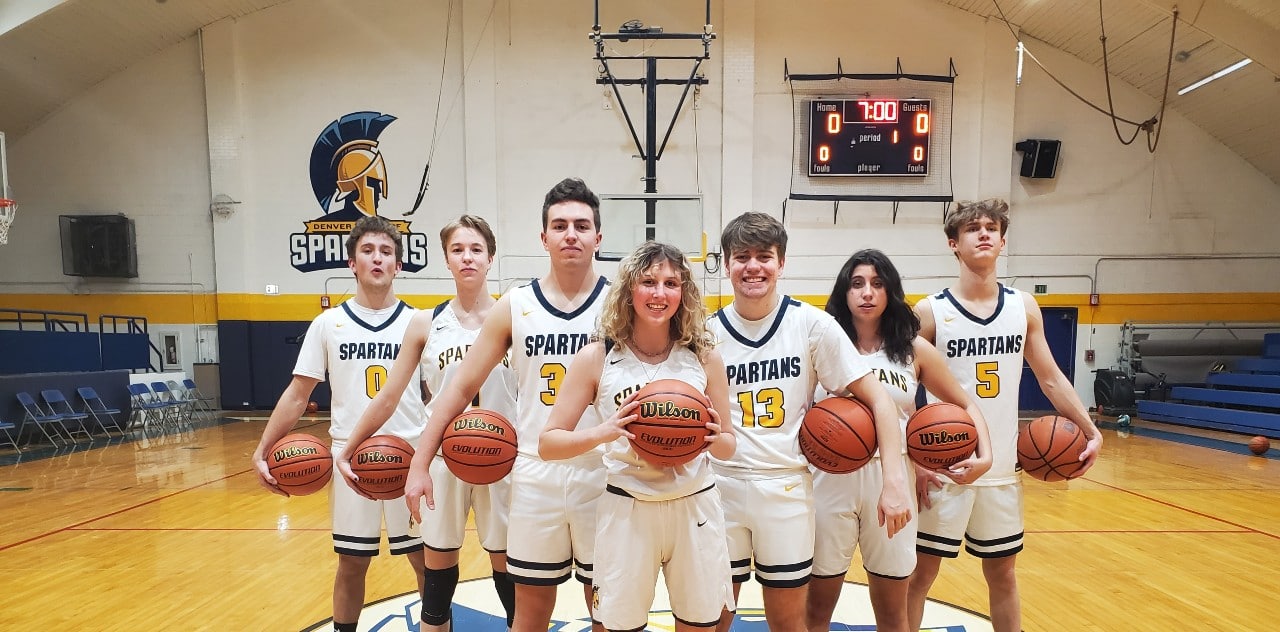
Celebrating 7 Spartan Seniors on February 14th
It is with gratitude, excitement, and joy that we honor our beloved 12th graders on Senior Night — a DWS tradition taking place during the varsity basketball game versus Mile High Academy on February 14th. About these one-of-a-kind athletes, Coach Quinn reflected the following:
What an amazing group of senior athletes we have this year! In fact, they are the most winningest group to have come through DWS to date! They have put in a lot of time, hard work, and dedication into multiple sports throughout the last four years, helping to make our Spartan Athletics Program an even bigger success! Personally, I'd like to say thank you to them and their families for all of their hard work and support the past four years! Read below to get to know more about these incredible athletes. GO SPARTANS!
Eliza Blanning
Eliza Blanning is a four-year player (three with Denver Waldorf and one at Denver South). A captain every year here at DWS, she has shown great leadership and dedication to the program. The leading scorer on the girls' team all 3 years, but she also does everything a coach could ask for on the court in leading the team rebounding. She blocked shots while also handling the ball a lot for the team.
Stazi Salazar
Stazi Salazar is a three-year player who has been extremely dedicated to the basketball program and has improved tremendously over the past years. She is a hard working and unselfish player who does all the little things a team needs and probably doesn't get the recognition she deserves. We appreciate all she does!
Daisy Macomber
Daisy Macomber is a three-year player who is very committed and has also improved very much over her time on the team. Daisy is tough and scrappy. She will not back down on the court and is a defensive pest. Her shot has really improved, and she always pushes herself and her teammates to be better.
Dylan Quinn
A starter during all four years, Dylan Quinn was also a captain as a Junior and Senior. Dylan finished as the school’s all-time leading scorer with 956 points, and holds the single game points record (39 points in a game). He is the school’s leading 3-pt shooter with 173 made 3’s. Dylan’s commitment to the basketball team and this program has been second to none. He's been our primary point guard and ball handler all four years. Dylan averaged a career high of 17.5 points a game and 33% shooting from 3. Dylan was selected to the 5280 All League 2nd team for the second time (was also an Honorable Mention previously 2 previous times).
Will McHenry
A captain and a starter during all four years on Varsity, Will McHenry finished as the school’s second all-time leading scorer with 919 career points. He is also the school’s leading rebounder with 648 rebounds in his career. Will plays with tremendous heart and energy in every game, and is one of, if not the hardest working players I’ve ever coached. A very efficient scorer inside and out, Will averaged a career high 16.7 points and 13 rebounds per game. Will was selected to the 5280 All League 1st team for the first time (was also 2nd Team and 2x Honorable Mention previously).
Jonah Carr
Jonah Carr is a four-year varsity player who has shown growth every year and has developed into a pillar of our team' success during this amazing 4-year run. Jonah does all of the little things that a coach loves and a player hardly gets credit for. He has always taken on the task of guarding the best "bigs" on the other team and isn't afraid of the challenge. He’s dedicated and has worked extremely hard to become one of the top players in the school program. Jonah averaged a career high of 11.3 points and 5.4 rebounds per game this year. Jonah was selected to 5280 All League 2nd Team (his 1st selection).
Lucas Lewis
Lucas Lewis is a four-year Varsity player who brings a lot of energy and athleticism to our team. He is a versatile player who can score in multiple ways offensively, he's a slasher that can also shoot from the perimeter. Defensively at times, he's been asked to guard the best player on the court inside and out and has locked them down. Lucas has battled through a lot of injuries in his career but has always persevered and found away to get back onto the court to help our team. He’s an exciting player to watch and has improved his scoring average every year over the past 4 years including this year averaging a career best 10.6 points and 5.2 rebounds a game. Lucas was selected as Honorable Mention 5280 All League team member (his 1st Selection).
DWS Town Hall
The Work Ahead
Join us for a virtual Town Hall led by School Director Kelly Church.
Date: Wednesday, February 9th
Time: 6-7pm MT
Location: Online via Zoom
Following Kelly’s overview and presentation on the path forward, you’ll hear from:
- Board of Trustees Co-Chair Ryan Gregory
- Education Director Vernon Dewey
- High School Director Brie Kaiser
- Finance Director Laurie Thompson
- Operations Manager Christa Gustafson
- Marketing Director Jen Lamboy
Zoom Details
Join us online
Join us by phone
Webinar ID: 941 6892 6586
The Importance and Power of Movement
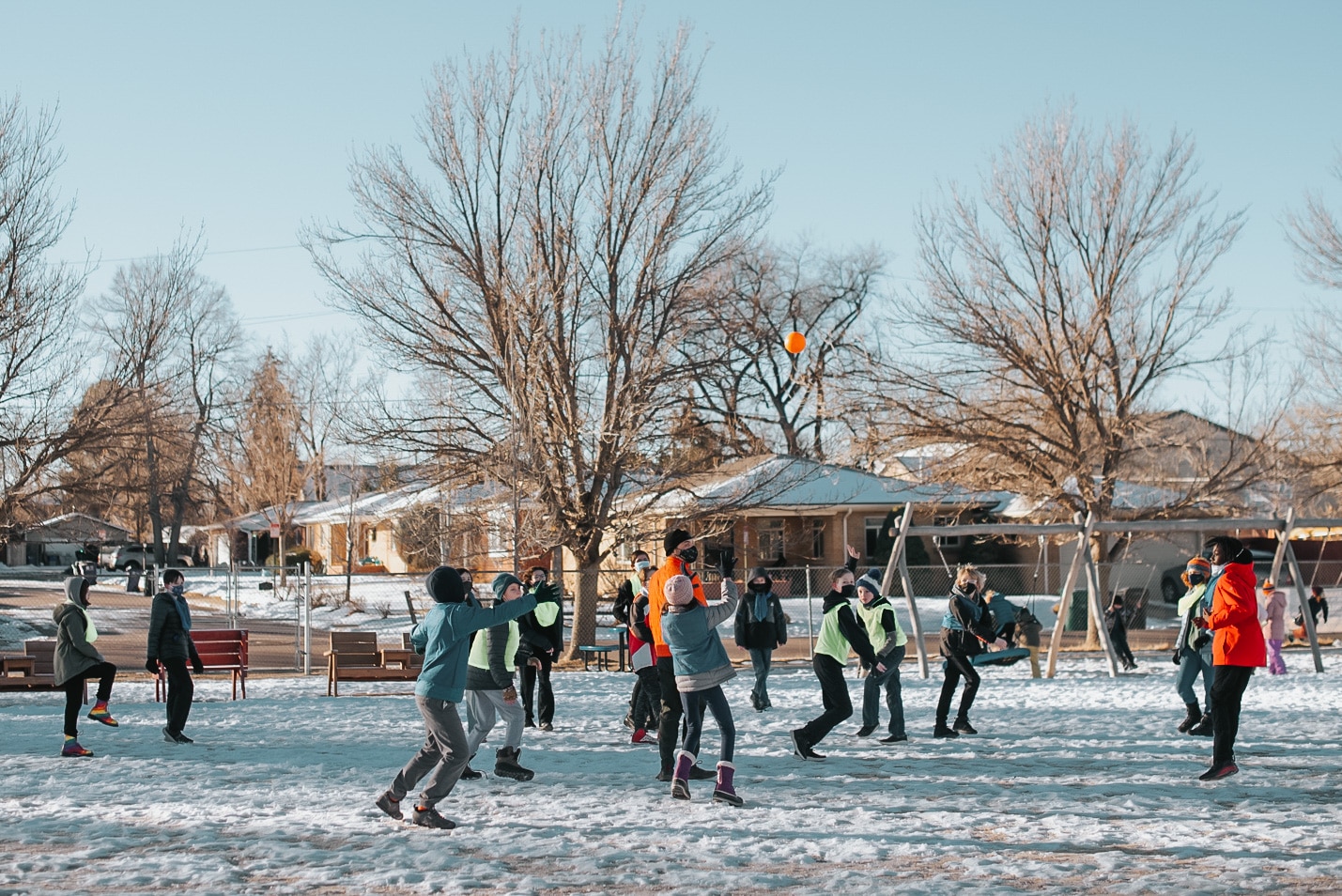
Did you move today? Invariably, the answer to that question is yes. As my students say when I ask them to stand still, “Actually, Mr. Orphanides, we are always moving. My blood is moving, my eyes are moving, I’m breathing, my heart is beating… we actually can’t stand still.” Well, they are right!
And, along with these perpetual and life-supporting movements, we, as human beings, move in many other, sometimes subtle, ways as well. Whether we are sitting or walking, running or performing a skilled task such as typing, shooting a basketball, sustaining a strong Warrior I or walking a tight-wire spanning the towers of Notre Dame, we are engaging muscles, senses, reflexes and movement patterns that we developed largely in our childhood -- and that we need to use and exercise regularly in order to stay healthy, attentive, alert and mobile.
Many of the movements we make in early childhood, such as playing on our tummies as infants, crawling, standing and taking our first steps, lay the foundation for many of our capacities for learning later in life. The “old fashioned” childhood activities of wrestling, spinning, tumbling, rolling down hills, and climbing trees not only create healthy neural pathways for “academic” success, but they also allow us to develop the confidence, self-regulation, decision-making powers and sense of our relationship to other people that are key factors for healthy social development (often called “executive functions”).
In terms of those often imperceptible movements the students mentioned, the movement of our physical bodies also stimulates the healthy circulation of the two major fluids in our body: blood and lymph. In fact, it is said that breathing and the movement of our muscles are what keep the lymph moving through our bodies, a key aspect of our immune system. It is no small wonder, therefore, that we often describe the activity of a graceful athlete or dancer as being “fluid.” We need to move those vital fluids through our body to keep our bodies functioning and to keep our mental and emotional “bodies” in good health as well.
With all this said, there is a growing concern among many people who study movement, as well as educators, parents, doctors and therapists, that we don’t move our bodies enough in today’s world, and this concern is especially pressing for young people. While we cover great distances in our planes, trains and automobiles (and can communicate with someone thousands of miles away instantaneously), we spend an increasing amount of time in front of our screens and behind the wheel of our cars.
Everyone reading this most likely knows everything listed above, and yet, we are all so busy and often over-burdened by our responsibilities in today’s world that we just can’t find the time or energy to move or to help our children move. It can be a struggle to get outside for a run or walk or to get on the treadmill or yoga mat.
If this is indeed a challenge for you, I will offer the same advice I have been given and give to others who are striving to start a meditation practice. 2 minutes. Engage in an intentional movement for 2 minutes each day, and, if you have children, engage them as well. Spin your arms around. High step your legs. Go up on tiptoes ten times. Pushups. Moonwalk. Hip-hop dance moves. It’s a start, and it will grow.
And, hopefully, you will be laughing or at least smiling. There are even studies that show that you can build muscle by imagining yourself moving! Start there if you need to! You could even start right now.
Written by Movement Teacher and Therapeutic Movement Specialist Charlie Orphanides

College Nights: Paying for College
Paying for College
Parents and students are invited to attend the fourth evening of our 6-part College Nights series with DWS College and Post-Secondary Guidance Counselor Laura Shope.
Topic: Paying for College — Ideal for Grades 10, 11, and 12
Date: February 3, 2022
Time: 6:30pm MT
Location: In person at DWS and online via Zoom
Please register once to reserve a seat for all remaining dates.
What You’ll Learn
In this informational session, we will cover the key concepts you need to understand regarding the financial side of paying for college. We will discuss what all the terms mean, how to estimate what the true cost of a particular college or program will be, the timing of the various steps, and what you can do now to prepare. We will also touch on scholarships and alternative pathways to making it all work!
Key takeaways include:
- Understand the terms you will encounter: cost of attendance, estimated family contribution, FAFSA, etc.
- Know how you can estimate what the colleges will expect you can pay
- Identify next steps for your family to prepare
About College Nights
Our monthly College Nights series focuses on different aspects of the college and post-secondary application process. Laura Shope designed each evening to answer questions and support parents and students in the college application process. These meetings are open to all, although probably most useful to the grade listed with each topic.
- October 7th—Application Process 101 (Grades 10 and 11)
- November 4—SAT and ACT (Grades 10 and 11)
- December—No meeting
- January 6—Supporting Your Student through the Process (Grades 10 and 11)
- February 3—Paying for College (Grades 10 , 11, and 12)
- March 3—Making Choices (Grades 10 and 11)
- April 21—College Engagement and Success (Grade 12)
- May 4—Preparing to Apply & Making the Most of Summer (Grade 11)
About Laura Shope
Laura Shope came to DWS in 2021 via the Rudolf Steiner School of Ann Arbor, where she served as the High School Student Support Coordinator and High School Administrator for the past three years, and a parent in the Waldorf community for more than 17 years. She has extensive training in career development and personal coaching, along with having recently completed her Waldorf High School Teacher Training through the Center for Anthroposophy. Her plans for working with our students and faculty include creating a rich program of self-reflection, support, and clarity around the decisions the students make for their plans after high school.
Laura is a passionate artist and works with stone, clay, wood, weaving, and plaster to create abstract forms. She and her husband, Dale Jensen, are outdoor enthusiasts and look forward to exploring all that Colorado has to offer. They have two sons, Wilder and Corbin, who attended Waldorf schools from preschool through grade 12 (Corbin will graduate from RSSAA in 2022).
About The Denver Waldorf High School
The Denver Waldorf High School offers a liberal arts education, consciously aimed to nurture and encourage adolescent ideals. The high school experience aims to balance the students’ academic needs with their longing to find meaning in the world. Scroll down to hear from a few of our faculty members.
Engaging Body, Intellect, and Emotion
At the start of each day, movement helps spark students’ circulation and bring them together. They then engage in a long, uninterrupted seminar (referred to as main lesson in elementary and middle school) to activate their minds, followed by music and elective classes to spark emotional expression. Music classes and elective courses promote the development of healthy emotional expression through creation.
High School Music
Regarding music, all high school students participate in chorus, with the option to participate in either music ensemble or orchestra until their senior year. Students new to DWS and who have not played their instrument before are strongly encouraged to take private lessons.
Hands-On Learning of Real-World Skills
Students apply what they’ve learned theoretically to scenarios in the real world. For example, a study of soil composition could be applied to a chemistry lesson on acids and bases, as well as a close reading of The Grapes of Wrath, and a course in black-and-white photography in which they learn to develop their own film.
Rhythm of Thinking, Feeling, and Willing
Our goal is to expose our high school students to academic wealth, and demonstrate to them that all knowledge is valuable to encourage their pursuit of wisdom throughout life.
The high school curriculum revisits themes and subjects periodically to strengthen functional knowledge. Students cultivate their ability to think critically, organize ideas and information, and clearly present thoughts through an academically challenging mix of math, English, humanities, physics, life sciences, chemistry, world language, practical, industrial and fine arts, chorus, orchestra, drama, and physical education.
About The Denver Waldorf School
The Denver Waldorf School is an urban pre-K through 12 independent school in Colorado. Founded in 1974 on Rudolf Steiner’s humanitarian curriculum, DWS believes education should foster what it is to be human, cultivate lifelong curiosity, and inspire a love for the world. We are currently enrolling for in-person learning:
Want to learn more about us? Schedule an in-person tour of our Denver campus or join us online during our virtual events.
Virtual Alumni Panel
Hear from DWS Graduates
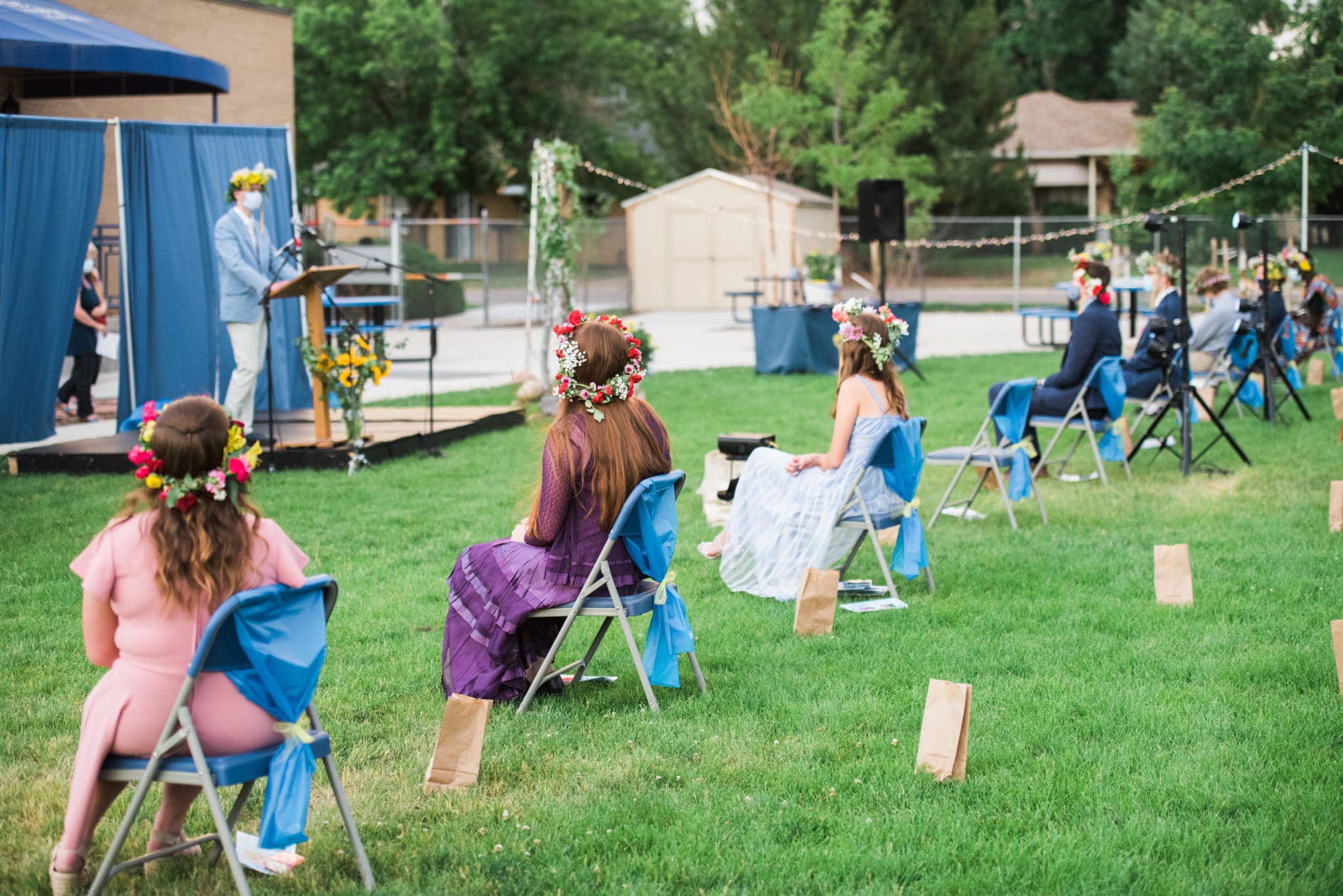
Join us for an evening with alumni of The Denver Waldorf School! Ideal for those who want to learn more on college preparedness and how Waldorf education guides students to due incredible work when they step beyond our doors.
Date: Wednesday, January 12th
Time: 7pm MT
Location: Online via Zoom
Open to all! Please register to reserve a spot.
About Our Alumni Panelists
Sydney Rae Lewark (she/her/hers)
Sydney graduated from DWS in 2017. She then attended Hawaii Pacific University/University of Colorado Boulder, and graduated with an Environmental Science & Ecology Bachelor’s Degree. Sydney also attended The School for International Training, where she received a certificate in Comparative Ecology & Conservation. Currently working as a Scuba Schools International Freedive Instructor in Nicaragua, she teaches and trains freedivers in the Laguna de Apoyo crater lake. She teaches in both English and Spanish (and hopefully soon French!). Sydney also develops programs for the school and outside organizations, including work on environmental initiatives around the Laguna. Her education at DWS gave her an almost insatiable desire to keep learning. As an individual, this has filled her life with amazing hobbies, guided her to incredible adventures, and continues to push her to grow as a person and a global community member. In her professional life, she finds herself filling many niches, including working on ecological film projects, figuring out new ways to display biodiversity data, writing project proposals, and even teaching students how to hold their breath underwater. DWS shaped her ability to connect to people (no matter the community or the place!), taught her to always find creative solutions, and gave her the desire to never stop expanding her knowledge of the world.
Matthew Douglas-May (he/him/his)
Matthew graduated from DWS in 2017. He graduated from St. Olaf College with a Bachelor’s Degree in Environmental Studies and minors in Latin American Studies and Business Management. DWS helped Matthew learn public speaking through theater, apply a creative eye to his work, and gave him the confidence and know-how to create a piece of work that is his own. Plus, Matthew continually uses what he learned about emotional intelligence at Waldorf in his daily life and work.
Tyler Franklin (he/him/his)
Tyler graduated from DWS in 2007. He received a Bachelor of Science in Mechanical Engineering from the Georgia Institute of Technology. He is now Director of Health Information Management at Epic Systems, a healthcare software company, where he leads the Health Information Management and Identity support team. DWS most impacted Tyler by teaching him the importance of being well rounded and dedication to work hard at an endeavor even if it doesn’t come naturally. DWS also prepared him for STEM classes in college and technical skills in his work, while also giving him an advantage in liberal arts over his fellow Georgia Tech students. He attributes being well rounded for helping him to be a better manager.
Nyasia Allen (she/her/hers)
Nyasia Allen went on from DWS to attend Pennsylvania State University. Nyasia now works at Chipotle training newcomers. DWS helped prepare her for the rigors of college by teaching her many lessons not only in the classroom, but in the outside world as well. Nyasia loved studying math and science, but she also had the chance to create art outside, experience Costa Rica, and so much more. She notes that although Waldorf isn’t a traditional type of education, its teaching style and supportive community are really beneficial to students of all backgrounds.
Taylor Cornelius (she/her/hers)
Taylor graduated from DWS in 2012 and went on to attend Kenyon College and New York University, where she graduated with a MFA in Poetry. She now works as a freelance copywriter. Her time at DWS encouraged her to pursue her passion for poetry, and instilled a lasting appreciation for creativity and collaboration. Regarding DWS she says, “It’s a great education—don’t worry about the reading age!”
About The Denver Waldorf School
The Denver Waldorf School is an urban pre-K through 12 independent school in Colorado. Founded in 1974 on Rudolf Steiner’s humanitarian curriculum, DWS believes education should foster what it is to be human, cultivate lifelong curiosity, and inspire a love for the world. We are currently enrolling for in-person learning:
Want to learn more about us? Learn more about our in-person and virtual events, read our blog, or take a listen to our podcast.
Event Registration
First Grade Readiness Q&A
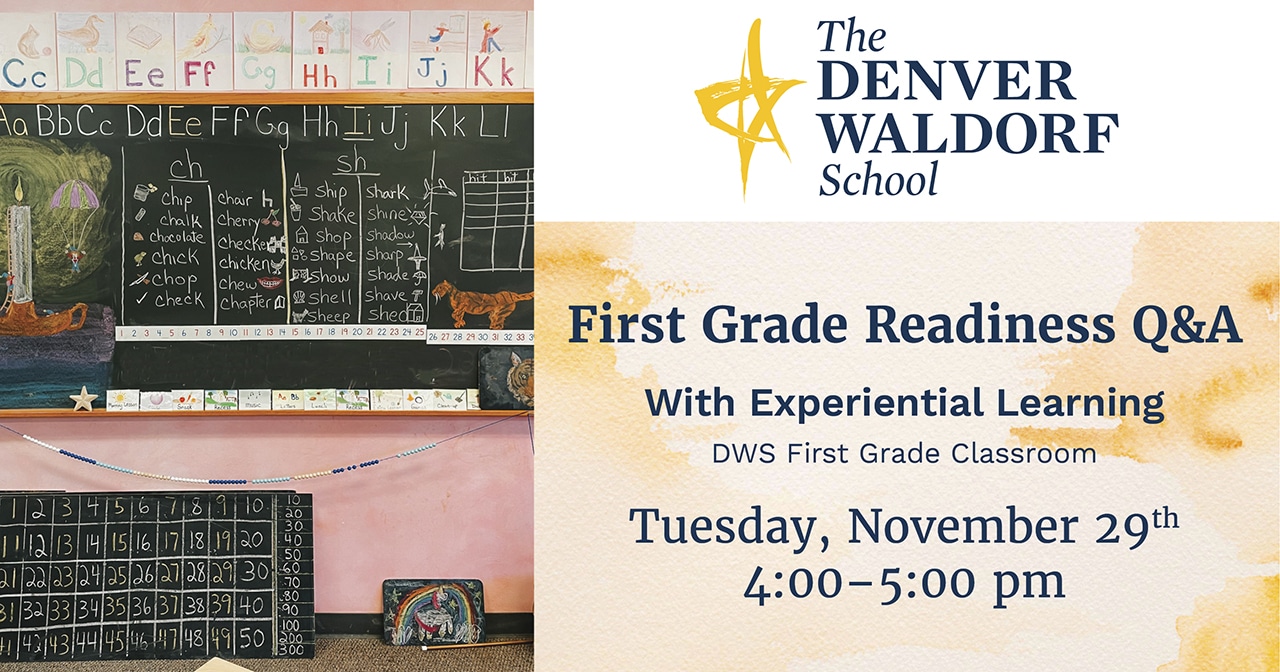
Learn more about elementary school academics, assessments, and how Waldorf education prepares children for the future. Ideal for parents of preschool and kindergarten students, this Q&A will be led by long-time Waldorf educator and student evaluation specialist Faustina Pfister.
Date: Tuesday, November 29th, 2022
Time: 4-5pm
Location: DWS First Grade Classroom (2100 S Pennsylvania, Denver, CO 80210)
Please register to reserve a seat.
Childcare will be provided through our aftercare program. Please sign up through BigSIS if you have a currently enrolled student or email Ben Katz at [email protected] if you have a prospective student. All students must be at least 3.5 years old and toileting independently.
What You’ll Learn
Our faculty will answer common questions about:
- The transition from kindergarten to 1st grade and the first grade readiness process and evaluation
- Specific pedagogical elements of the first grade, presented by Magally Luna (current first grade teacher)
- Why a strong foundation positively sets up children to excel in the lower grades (1-4) curriculum, presented by Jessie Cartwright (current third grade teacher)
Specifically, our faculty will cover why we do a readiness screening (versus solely going by birth date as in public school), and how to look at physical development, but also neurological development as shown through body movement and integration, spatial perception and orientation in space, and memory. Additionally, in Waldorf we strive to develop a holistic picture of each child in these realms plus speech and listening capacities and social/emotional maturity as well. Therefore, we’ll describe the “Why?” of readiness screenings and provide some examples of the “What?” each child experiences during the screening,
About Our First Grade Program
First grade is a child’s introduction to the collective being of a class. We nurture a deep reverence for the earth, compassion for classmates, and a healthy respect for every living thing.
From knitting to numbers, fairy tales to falling leaves, we help first graders discover the wonders of our world and understand the rhythm of life. This year is the beginning of a multi-year relationship with their teacher.
About Waldorf Educator Faustina Pfister
Faustina Pfister has been a teacher at The Denver Waldorf school for over 20 years. She started as a teacher in the kindergarten, then became a grades teacher 1-8. She is a certified in a variety of therapeutic modalities including Brain Gym, Handle, BRMT reflex integration, and executive function. When she left teaching, she went on to complete a certification in the Extra Lesson, an anthroposophical approach to curative education based on Audrey McAllen’s work. Supporting students who are non-traditional learners has been the main focus of my teaching. Currently, she works with students one-on-one and conduct screenings.
About The Denver Waldorf School
The Denver Waldorf School is an urban pre-K through 12 independent school in Colorado. Founded in 1974 on Rudolf Steiner’s humanitarian curriculum, DWS believes education should foster what it is to be human, cultivate lifelong curiosity, and inspire a love for the world. We are currently enrolling for in-person learning:
Want to learn more about us? Schedule an in-person tour of our Denver campus or join us online during our virtual events.
Register to Reserve a Seat
Before the Q&A
Please review the following webinar and this brief document on the 23-24 First Grade Readiness Process two weeks prior to the event.

2021 Winter Concerts
A Note from DWS Music Director Sara Fierer
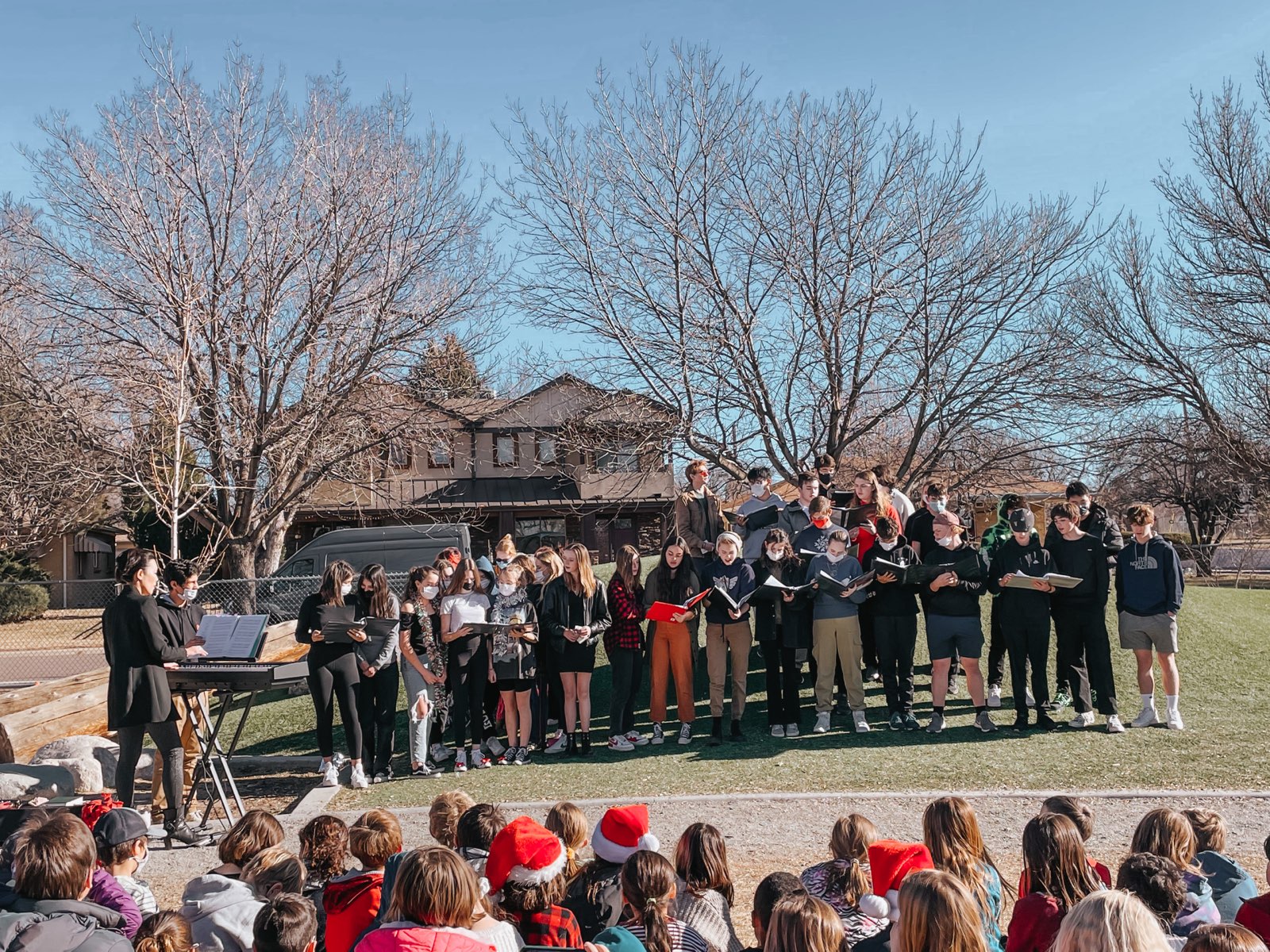
Welcome to our 2021 Winter Concerts!
Making music exemplifies the Waldorf values of developing the whole human being and inspiring them to bring relevant contributions to the world.
The pandemic has made it clear how powerful it is to make music in a group. During this year in particular, when the students make music together, the feeling of community is palpable. In fact, studies show making music is a great unifier and through participation it gives us a sense of social belonging. We come together to celebrate the effort and hard work in each group’s ability to play together.
I hope you can see and hear the love and joy as a result of the students working together to sing and play in harmony.
Thank you for giving us the precious opportunity of working with your children!
3rd Grade Strings
Twinkle, Twinkle Little Star; Dreidel, Dreidel, Dreidel; Jingle Bells; Are You Sleeping
4th Grade Chorus and Strings
Chorus — Bells of December
Strings — Bingo; Starlight; Hanukkah, Oh Hanukkah; Silent Night
5th Grade Chorus, Strings, and Winds
Chorus — Children, Go Where I Send Thee
Strings — Tops and Tails; Deck the Halls; Rock of Ages; Fanfare
Winds — Ode to Joy; Jingle Bells; Hanukkah, Oh Hanukkah
6th Grade Chorus, Strings, and Winds
Chorus — Winter Lullaby
Strings — Up on the House Top; Jingle Bells
Winds — Ode to Joy; Jingle Bells; Hanukkah, Oh Hanukkah
7th Grade Chorus, Strings, and Winds
Chorus — This Little Light of Mine
Strings — Angels We Have Heard on High; Rock of Ages; Baroque Fugue
Winds — Ode to Joy; Jingle Bells; Hanukkah, Oh Hanukkah
8th Grade Chorus, Strings, and Winds & Percussion
Chorus — Winter Song
Strings — Ukrainian Bell Carol; Primordium; Pirates of the Caribbean
Winds & Percussion — The Dragons of Komodo; Carol of the Bells; We Wish You a Merry Christmas
High School Orchestra, Chorus, and Guitar
Orchestra — Morning Hymn; Gallic Circle Dance, French Folk Dance; Fantasia from Nutcracker Suite, Dance of Sugar Plum Fairy; Artemis Rising
Chorus — Shule Aroon; Water Under the Bridge; When I Was Your Man; Happy Christmas; Jingle Bell Rock
Guitar — Let It Be; Isn’t She Lovely; In the Hall of the Mountain King

Immune Support for Greater School Attendance
Beginning with our youngest students in our early childhood classrooms, an emphasis on wholesome and nutritious snacks and meals are a part of our culture. In kindergarten, each day we share a family-style meal with the children helping to prepare the food (like our much loved vegetable soup recipe here), set the table, and wash up afterwards. We practice gratitude, intention of preparation, and come to understand the source of our food. Nutritious real food that contributes to our children's well-being and development is essential. We are grateful to have Carla Abate, a DWS parent and community member as well as a certified master nutrition therapist, share her wisdom below once again for our community - this time, on immune support as we head into the winter season!
Immune Support for Greater School Attendance
COVID has prompted many of us to take a deeper look at our daily habits, particularly those involving nutrition that do, or do not, support robust immune function. When we keep immune health in mind, our kids miss less days of school and do not get behind on their schoolwork. This is true for parents too! Less sick days for our kids, often translates to less days off of work for us as parents. Whole foods have been designed by nature to provide us with what we need to get through times of illness. Vitamin C for example, is a potent antioxidant that increases the production of white blood cells and antibodies to fight infection. While vitamin A facilitates the formation of the oral, respiratory, and gastrointestinal mucosal linings that are our first defense against pathogens. Let’s take a closer look at some of these immune warriors.
Antioxidants
Antioxidants help fight off inflammation caused by bacteria or viruses. These are what give plant foods their color and flavor. Often referred to as polyphenols, phytonutrients, or flavonoids, these components of fruits and vegetables are capable of deactivating free radicals that cause inflammation. Foods rich in vitamins A, C, E, and the minerals zinc and selenium are some of the more common antioxidants. To obtain these, integrate the following foods:
- Vitamin A - egg yolks, dairy, oily fish
- Carotenoids (precursor to vitamin A) - carrots, cantaloupe, tomato and sweet potato
- Vitamin C - bell peppers, citrus fruit, broccoli and strawberries
- Vitamin E - sunflower seeds, almonds, pumpkin and leafy greens
- Selenium - various animal sources (poultry, dairy, fish and eggs), oatmeal, brown rice, spinach and sunflower deeds
- Zinc - red meat, shellfish, legumes, cashews and sesame seeds
Probiotics
Probiotics are the beneficial bacteria that we host in our guts and other areas of the body that set the stage for a healthy microbiome by keeping unwelcome microbes in check. These microscopic allies perform many tasks that we take for granted such as:
- Extracting nutrients from the food we eat
- Synthesizing certain nutrients such as vitamin K
- Producing short chain fatty acids (SCFAs), essential to colon health
- Training and communicating with the immune system
While more research is needed to explain the mechanisms involved in many of these operations, it is well-established that gut bacteria play a major role in immune function. This relationship begins at birth and indicates that both the microbiome and immune system evolved together.
Prebiotics
Prebiotics are what feed the healthy bacteria and promote their proliferation. These include fermentable fibers, resistant starches, and complex carbohydrates known as oligosaccharides, all of which can be found in many common plant sources with which we are familiar. Similarly, bacteria generally considered pathogenic also have fuel preferences, tending to favor refined sugars and starches. This illustrates the very relevant role that food plays in shaping the gut ecology and thus its impact on immune function.
Vitamin D
Vitamin D is actually a hormone. In addition to its well-established role in bone and calcium regulation, it is also a significant modulator of the immune response, with vitamin D receptors present on many types of immune cells. It acts as such, by inhibiting certain immune cells and the subsequent production of inflammatory chemicals (cytokines), promoting instead the production of anti-inflammatory chemicals essential to immune tolerance.
This hormone is best produced from the interaction between the UVB rays of the sun and the cholesterol under the skin. However, the skin should be exposed without sunscreen for at least 15-30 minutes a few times per week. And since absorption varies depending on other factors, such as how much skin is exposed, and proximity to the equator, it may be best to include foods naturally rich in vitamin D (or fortified for vegetarians/vegans).
Key immune-boosting nutrients to include daily:
- Vitamin D - oily fish and egg yolks are a couple of the only foods that make vitamin D naturally
- Zinc-animal - based foods like beef, eggs, and dairy; nuts and seeds, especially sunflower and pumpkin seeds
- Vitamin C - bell peppers, citrus fruits, and broccoli
- Probiotics - probiotic foods include fermented foods such as yogurt, sauerkraut, sourdough bread and miso
- Prebiotics - prebiotic foods include avocado, chia, asparagus, root veggies, cocoa and onion
- Vitamin A - dark green and deep orange veggies are high in beta-carotene a precursor to active vitamin A- for optimal absorption lightly cook with fat as vitamin A is a fat-soluble vitamin; animal-based sources provide active vitamin A (eggs, fortified dairy, and liver)
Keeping it simple……
Routinely eating a variety of whole foods is the best approach to obtaining the above immune-boosting nutrients. This promotes diversity of the microbiome which is associated with lowered disease risk!
About Carla Abate
Carla Abate is a family wellness educator and advocate for the importance of nutrition during the perinatal stages. She is a certified master nutrition therapist (MNT) and postpartum doula. Her experience with pregnancy and entry into motherhood helped inspire what she does today. With motherhood came self-growth, inspiration, and courage. It also brought great challenge forcing her to dive deep into her own wellness journey. Today, it’s Carla's mission to help other mothers (and their families) flourish throughout pregnancy and well beyond.
Find out more at rebelrootsnutrition.com or on instagram @rebelrootsnutrition or contact Carla directly at carla@rebelrootsnutrition.com
References
https://www.ncbi.nlm.nih.gov/pmc/articles/PMC3166406/
https://www.frontiersin.org/articles/10.3389/fimmu.2018.01830/full
https://www.ncbi.nlm.nih.gov/pmc/articles/PMC6162863/
https://www.ncbi.nlm.nih.gov/pmc/articles/PMC4815357/