
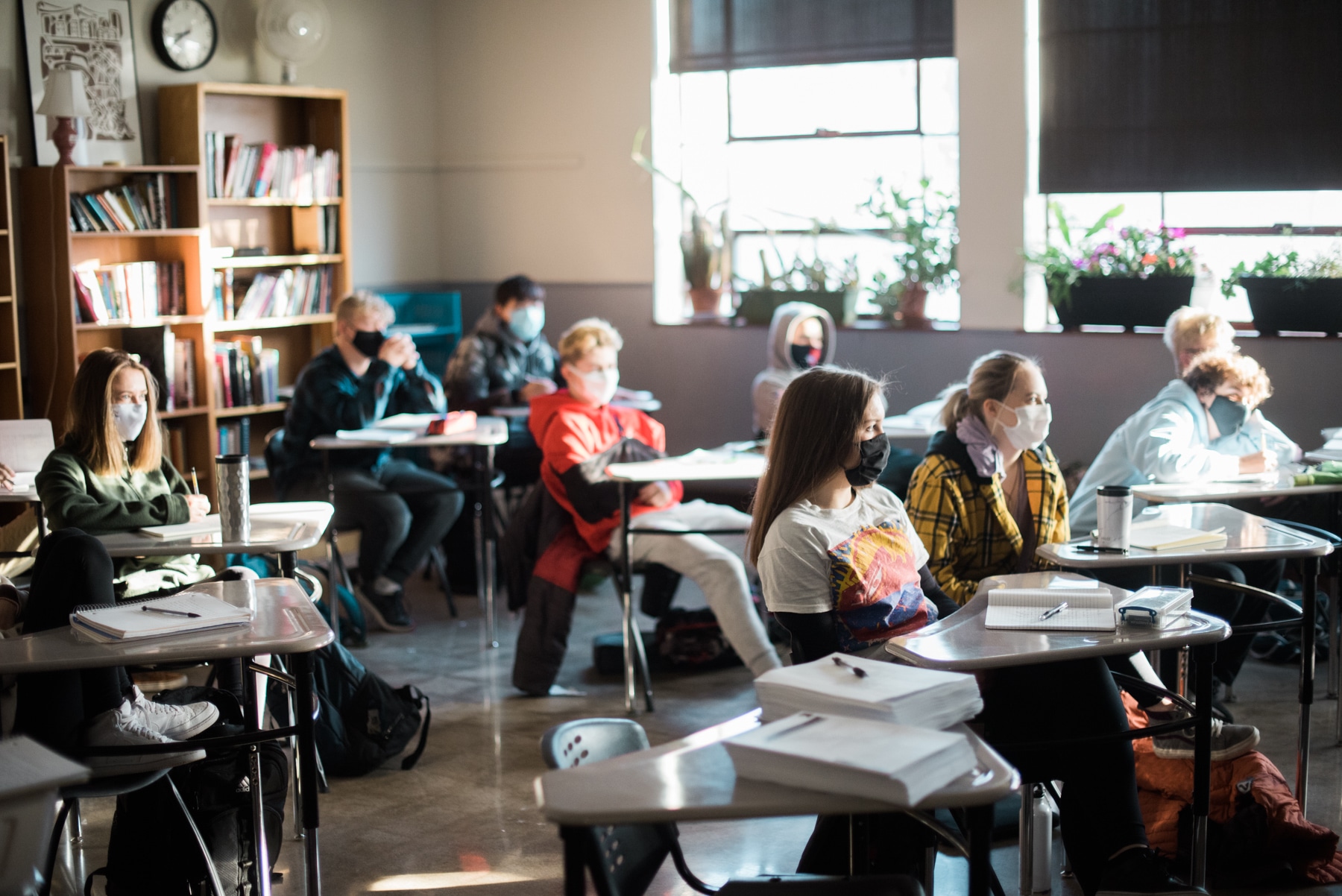
High School Panels
If you missed either of our live Q&As with The Denver Waldorf High School students and faculty, don’t fret. We recorded the session so you can catch a glimpse of our program and hear from those who make our high school one of the most incredible places in Denver.
Get to know The Denver Waldorf High School
High School Academics Q&A on January 12, 2021
With High School Director Brie Kaiser, Math Teacher Sarah Meyer, Science Teacher Wayne Mayer, Humanities Teacher Eric Mills, and some of our DWS high school students.

High School Arts and Theater Q&A on December 3, 2020
With High School Director Brie Kaiser, Art Teacher Kimberly Martin, Theater Teacher Leo Bond, and some of our DWS high school students.
High School Athletics and Arts Q&A on October 20, 2020
With Admissions Manager Brooke Camfield, High School Director Brie Kaiser, School Director Kelly Church, Athletic Director Michael Quinn, Art Teacher Kimberly Martin, Student Support Coordinator Sarah Boyer, and some of our DWS high school students.
Step Inside The Denver Waldorf High School
The Denver Waldorf High School offers a liberal arts education, consciously aimed to nurture and encourage adolescent ideals. The high school experience aims to balance the students’ academic needs with their longing to find meaning in the world. We are currently enrolling high school students and offering monthly group tours and experiential mornings.
Group Tours
Our monthly group tours Group Tours take place on the following dates at 9am.
Experience Waldorf
During our Experience Waldorf mornings, you’ll observe.
- November 11 from 11am to 12:30pm
- Story of Drama
- Civics & Constitution
- Embryology
- Data Science
- December 7 from 11am to 12:30pm
- Thermodynamics
- Environmental Science
- Parzival
- Transcendentalism

Wisdom of Waldorf - The Benefits of Handwriting
This week’s article is about the benefits of handwriting.
Virginia Berninger, a professor emerita of education at the University of Washington, states that “when we write a letter of the alphabet, we form it component stroke by component stroke, and that process of production involves pathways in the brain that go near or through parts that manage emotion.”
Handwriting is integral to Waldorf education. Form drawing using hands, feet and the whole body is the first step in becoming familiar with the basic components of letters as well as the basic forms that are implicit in even the most complex geometric forms. This is not only pedagogically sound, it supports brain development.
https://elemental.medium.com/bring-back-handwriting-its-goo…
– Sandra Easter, PhD
Wisdom of Waldorf is shared weekly via our Facebook page, connect here to follow with more wisdom!
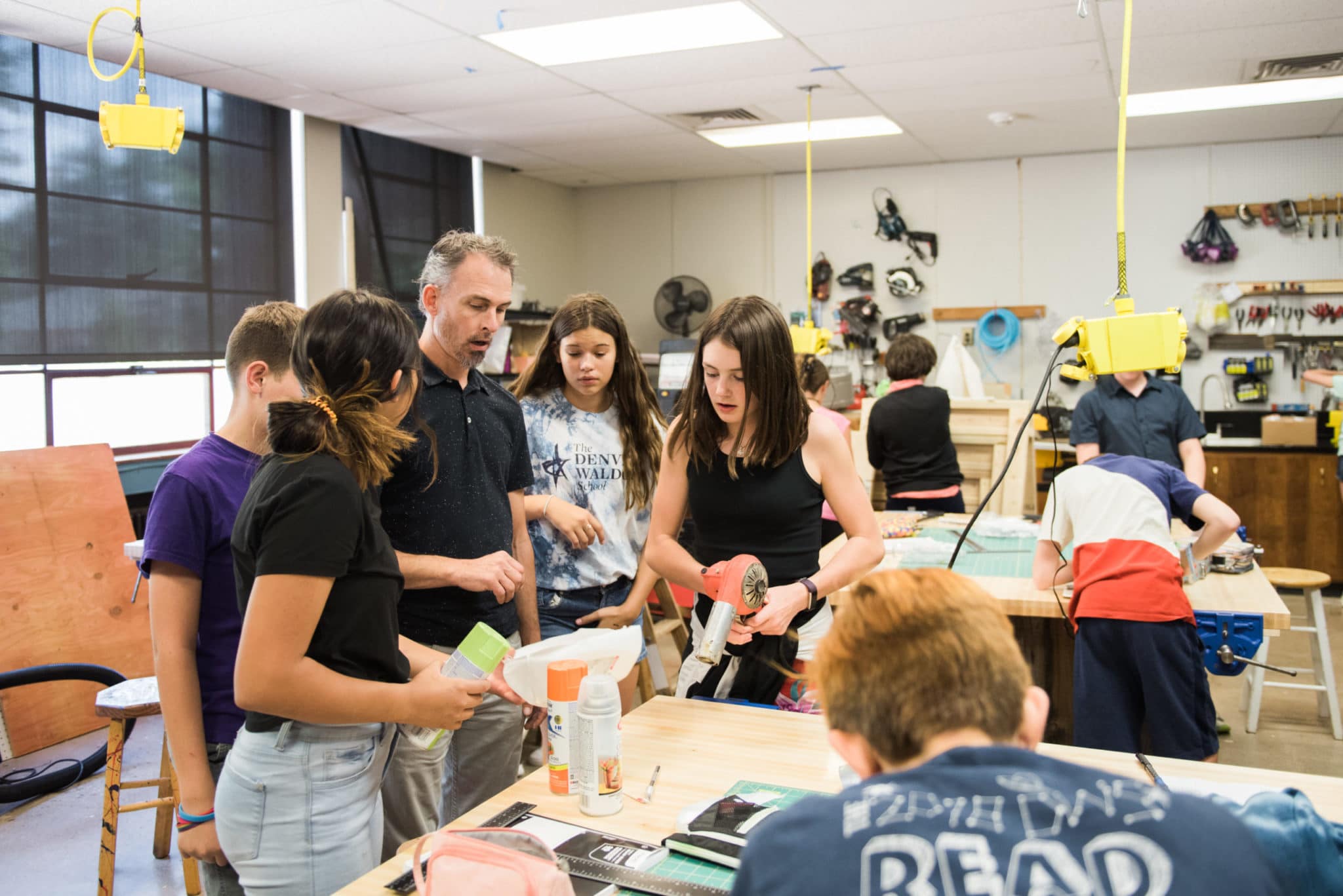
Denver Waldorf Teacher Spotlight - Nathan Ballenger
When students at The Denver Waldorf School are asked what they love about their education, they often comment that they treasure their close relationships with teachers. They are full of gratitude to be surrounded by caring, dedicated and inspiring teachers.
Our Teacher Spotlight series highlights a new teacher each month. This month, let’s get to know Nathan Ballenger.
What grades and subjects do you teach?
STEAM and Math: 6th grade through 8th grade.
Circus Club: 2nd grade through 8th grade.
What is your educational background?
I have a BS from Fort Lewis College in Durango, Colorado. I majored in Biology, minored in Chemistry and Psychology. I am also a Certified Energy Auditor.
What were the next stops on your journey prior to coming to The Denver Waldorf School?
I lived in India and traveled throughout the world before, during and after college. My travel and global community were deeply impactful of my journey. I have been to the home of the Dalai Lama, to the Old City of Jerusalem, to the jungles of the Quichua people in Ecuador and Peru, to the jungles of Chiapas and to Copper Canyon where the Tarahumara reside. I have hiked the Himalayas, the Andes and the Rockies. I traveled with a circus troupe in Ecuador doing acrobalance and clowning, as well as performed in circus on the streets of Delhi. All of these experiences have greatly contributed to who I am today.
My first job out of undergraduate school was as an air quality specialist for La Plata County in collaboration with the Colorado Air Pollution Control Division. I also sat on the Four Corners Ozone Task Force executive board, and worked directly with the Southern Ute Tribe emissions testing.
I then taught at Mancos Valley Independent School, a Waldorf school, as a 3rd grade co-teacher, Spanish teacher and games teacher.
I also owned and operated two companies- NRG By Design and Second Harvest Builders. NRG By Design provides services in energy efficiency auditing, analysis, design and construction. Second Harvest Builders is a custom home builder specializing in natural and alternative building techniques such as straw-bale construction, natural clay and lime plasters, reclaimed materials and conventional building practices.
Finally, I worked as a search-engine marketing consultant as well as at Tesla in solar design and consulting.
How many years have you taught at The Denver Waldorf School?
This will be my third year teaching, and my second year at The Denver Waldorf School. I also sat on the Mountain Phoenix Community School governing board for three years.
What drew you to the Waldorf curriculum?
I co-taught with Marian Barton at the Mancos Valley Independent School from 2004-2005. This experience influenced my entire parenting experience, and has been a part of my life ever since. My wife is a certified Waldorf teacher and Early Childhood Specialist. Waldorf curriculum and anthroposophy have been a big influence on my worldview for about 15 years.
What is your teaching philosophy and approach?
My number one goal is to generate enthusiasm and interest in all of my students for the subject matter, for learning and for life. This requires knowing each of my students individually, as well as knowing my class as a community. Each class is unique and requires different methods and creativity in the ways you approach teaching.
Middle school is a time when the children are beginning to look out into the world, in a way, for the first time. Prior to middle school, the children are focused inward, to their own self, their immediate community and family. In middle school, this shifts, and the children begin to look out toward their teachers, their peers and the world around them with interest and curiosity. This usually involves testing, trying things out, using different forms of communication etc. I try every day to pay special attention to what the children are seeking, asking for and excited about. This is ever-changing and shifts with the individuals and nature of the class.
As a teacher, my focus is to be flexible within that change, and to teach to the class in front of me at that moment. Not to teach to the class last week, or the class I think we should have. Middle school requires flexibility, creativity and an open mind. All of that said, I have an agenda including includes goals and expected outcomes. As the teacher, I show up well-prepared and ready to accomplish my goals with the class in order to prepare them for maximizing their own potential in academics and in life. I try to give them all the tools and experience I can muster while making sure they feel supported, loved and encouraged.
The Waldorf philosophy of education focuses on the whole child. What does this mean to you?
The whole child in short is the head, the heart and the hands. As a Waldorf teacher, we learn to understand what is developmentally appropriate for children in each phase and year of their growth and development. Teaching to the whole child means that learning involves a lot more than just memory. Not only do children learn differently as they grow, but each of them also learns differently through various methods of teaching. Experiencing the sensation of sawing wood with a fine-tooth saw and a large-tooth saw teaches a relationship with wood and tools in a way that words and pictures cannot reproduce. Some children learn well through hearing, some through seeing, some through experiencing and some through expressing.
Teaching the whole child means that we are using all of these methods with purpose. To teach to the whole child, I use multiple techniques, and I also pay special attention to what each child is going through and needing as they grow. Getting to know the students is learning about the whole child that I must teach to. This takes time, effort and mediation daily.
What makes The Denver Waldorf School unique?
The Denver Waldorf School is full of history. The faculty brings decades upon decades of experience. This rich soil of experience provides a deeply enriching environment for both students and new teachers who are fortunate enough to find their home at DWS. Our school is the product of this faculty experience as well as of many DWS families stretching back 45 years in the Denver area. I witness this wealth of history and experience in every faculty meeting, in the hallways we all pass through, and in the children who are impacted by it all. DWS is a special place because of the spirit of all who have been here and of all who are here today.
Pictured in the new STEAM classroom

Wisdom of Waldorf - The Importance of Breathing Out
This week’s article is about the way the “busyness” that is so characteristic of our modern culture affects our ability to be creative, and, our overall quality of life.
Stanford’s Emma Seppälä writes:
“The idea is to balance linear thinking—which requires intense focus—with creative thinking, which is borne out of idleness. Switching between the two modes seems to be the optimal way to do good, inventive work.”
Waldorf education, from pre-school through high school, recognizes this natural rhythm of breathing in and breathing out, of focused thinking and daydreaming, of intellectual rigor balanced with play. In this busy, demanding time of year, thought it might be worthwhile to bring attention to the value of breathing out.
~ Sandra Easter, PhD
Wisdom of Waldorf is shared weekly via our Facebook page, connect here to follow with more wisdom!

Wisdom of Waldorf - Impact of the Arts on Learning
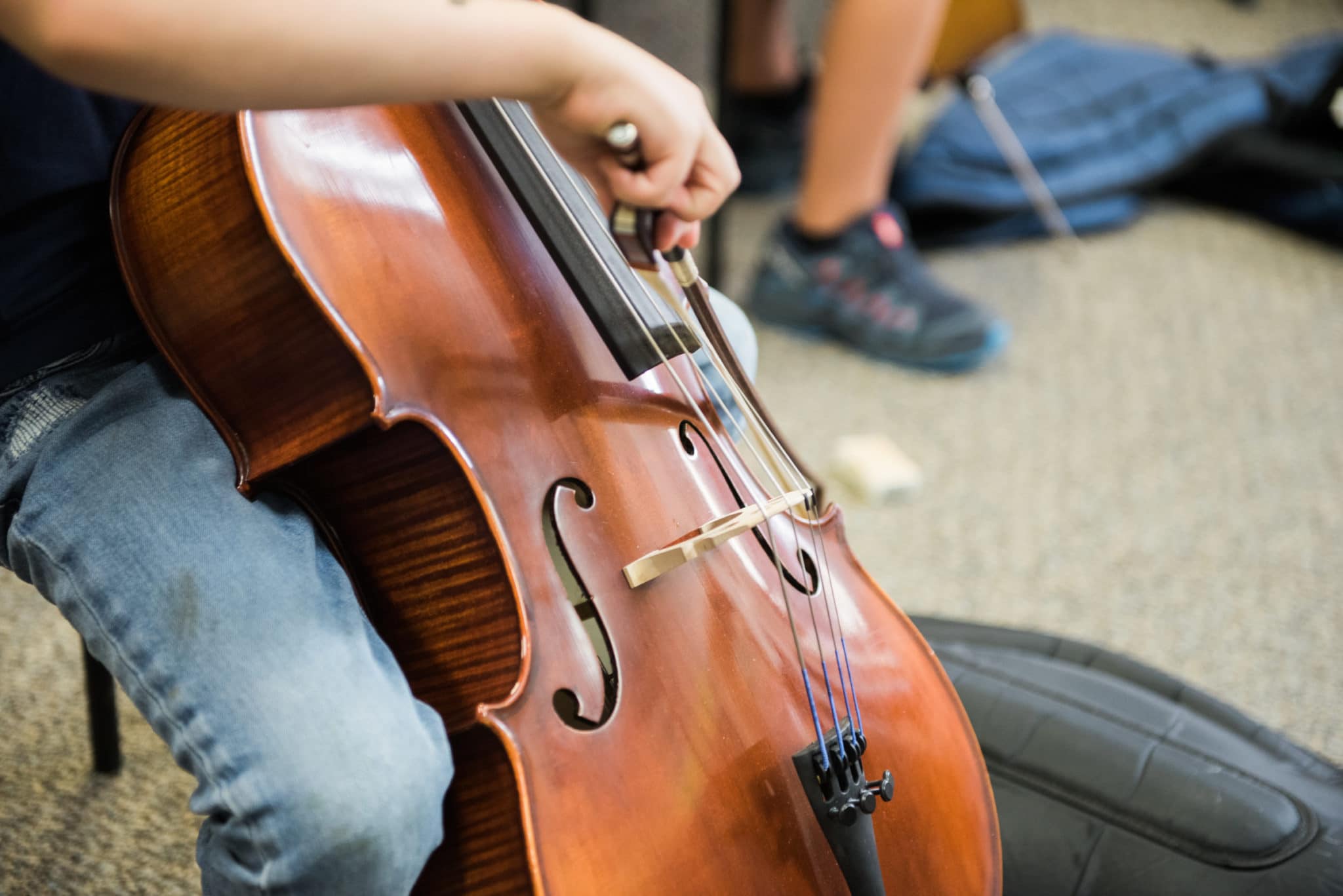
This week’s post references a study that investigated the impact of the arts on learning. One of the questions and concerns many parents have about Waldorf education is the prominence of the arts. This recent research supports what’s been integral to the Waldorf pedagogy from its inception. The following quote sums it up.
“Arts learning experiences benefit students in terms of social, emotional, and academic outcomes,” write researchers Dan Bowen of Texas A&M and Brian Kisida of the University of Missouri.
Sandra Easter, PhD
Wisdom of Waldorf is shared weekly via our Facebook page, connect here to follow with more wisdom!
Denver Waldorf Teacher Spotlight - Dr. Wayne Mayer
When our students are asked what they love about their education at The Denver Waldorf School, one answer we hear frequently is that they treasure their close relationships with teachers. They are full of gratitude to be surrounded by caring, dedicated, and inspiring teachers. Our Teacher Spotlight series highlights a new teacher each month.
Let’s get to know Dr. Wayne Mayer below.
What grades and subjects do you teach?
I teach the high school’s Life Science courses along with two electives, including:
Human Anatomy – 9th Grade
Organic Chemistry (9th Grade)
Human Physiology (10th Grade)
Acids, Bases, and Salts (10th Grade)
Acids, Bases, and Salts Lab (10th Grade)
Atomic Chemistry (11th Grade)
Atomic Chemistry Lab (11th Grade)
Botany (11th Grade)
Embryology (11th Grade)
Human Sexuality (11th Grade)
Biochemistry (12th Grade)
Planet Earth (12th Grade)
Zoology (12th Grade)
The Science of Simple Tools – elective
The Culture of Peru Through Food – elective
What is your educational background?
PhD, December 2006 Environmental Science & Policy Duke University, Durham, NC
Graduate Certificates: International Development Policy; Latin American and Caribbean Studies
MS, June 1994 Forestry & Ecology University of Washington, Seattle, WA
BA, June 1991 Environmental Science, cum laude, University of Denver, Denver, CO
Double Minors: Anthropology; English Literature
What was the next stop (or stops) in your journey before coming to The Denver Waldorf School?
I lived in Latin America where I worked as an educator, a journalist, a conservationist, a research scientist, and a sustainability and sustainable development consultant.
As a consultant, I led a wide range of clients in situations that were often complex, technical, contentious, multi-disciplinary, and involved varying numbers of people from small focus groups to large strategy summits. I guided clients to transform “Us vs Them” dynamics into “All of Us” alliances.
How many years have you taught at The Denver Waldorf School?
This is my first-year teaching at The Denver Waldorf School, but I have been teaching at the university level for over 25 years. From 1996 to 1998, I served as the Academic Director for the School for International Training (SIT) College Semester Abroad Program in Venezuela. Currently, I hold visiting faculty appointments at both the University of Denver and Duke University.
What drew you to the Waldorf curriculum?
I like the integrated, holistic approach to teaching and learning.
What is your teaching philosophy and approach?
The best learning—whether through formal and rigorous academics or informal and playful dialogue—occurs through what I call “fun with a purpose.” As the former Academic Director for the School for International Training’s College Semester Abroad Program in Venezuela, I know that communication through stories proves useful in field-based teaching and in communicating the concepts of biological conservation to communities and project participants. For example, if a student is listening to a story and is enthralled and laughing and then, suddenly, she realizes that this story is about the reproductive biology of a palm species or the mating habits of an endangered tree frog, she’ll likely think that learning about nature and science shouldn’t be this much fun. I aim for that reaction. I also strive to inspire students to ask the overarching questions: Why is that? Why does this matter? I address these questions at the onset of a block; then, throughout the course, I do my best to express my own excitement and interest in the subject at hand. Together, my students and I search for answers. In doing so, I hope to teach and to learn more about both the wonder of nature and the urgent need to conserve it.
The Waldorf philosophy of education focuses on the whole child. What does this mean to you?
Teaching the whole child means tapping into the student’s internal inspiration—understanding what motivates that child—and teaching and learning through an integrated combination of social, emotional, and academic connections. This triangulation of head, heart, hands or mind, body, spirit, means bringing art, nature and movement into the attraction, appeal and relevancy of learning.
What makes The Denver Waldorf School unique?
The enthusiastic teachers and administrators make The Denver Waldorf School a one-of-a-kind place to teach and learn.
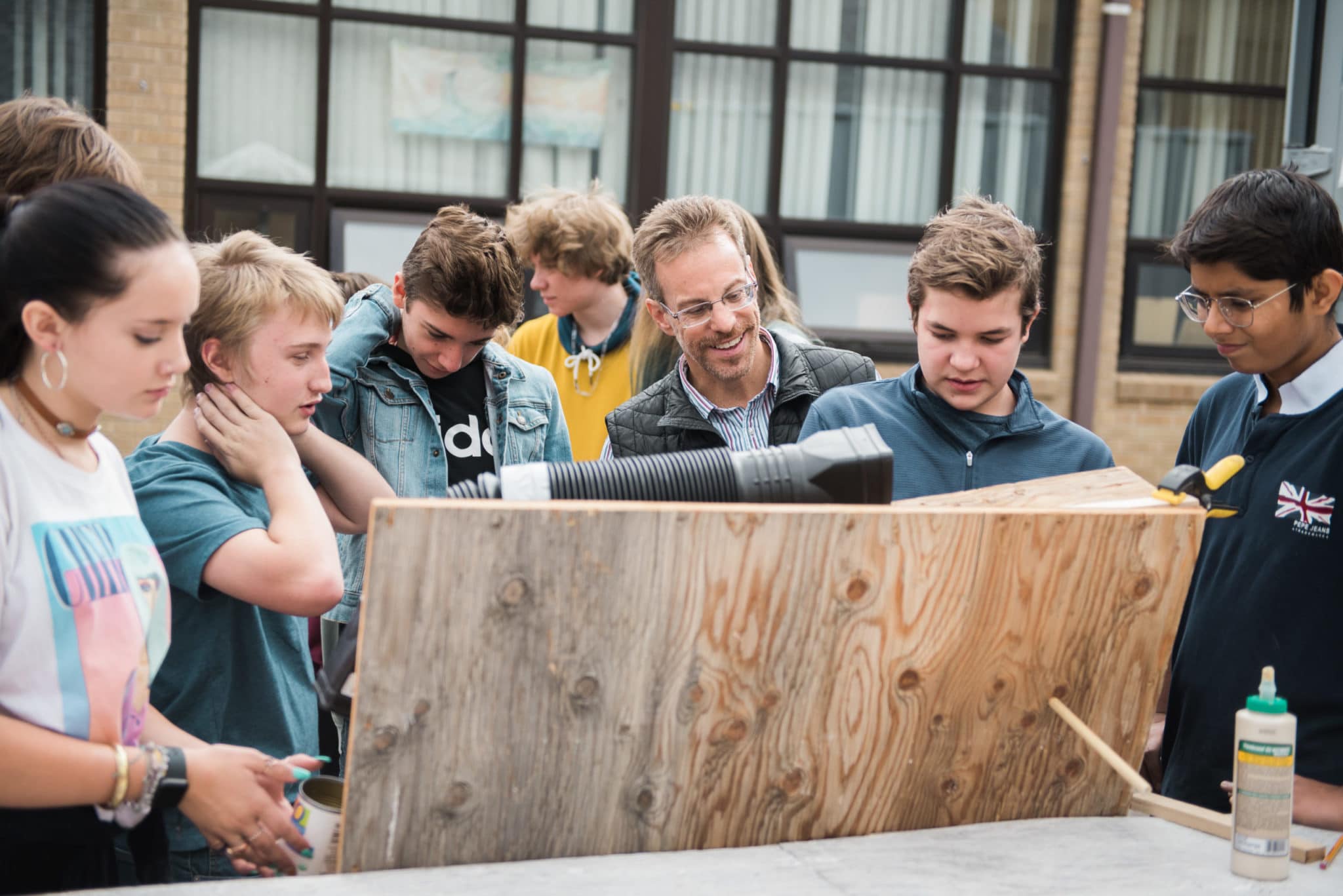
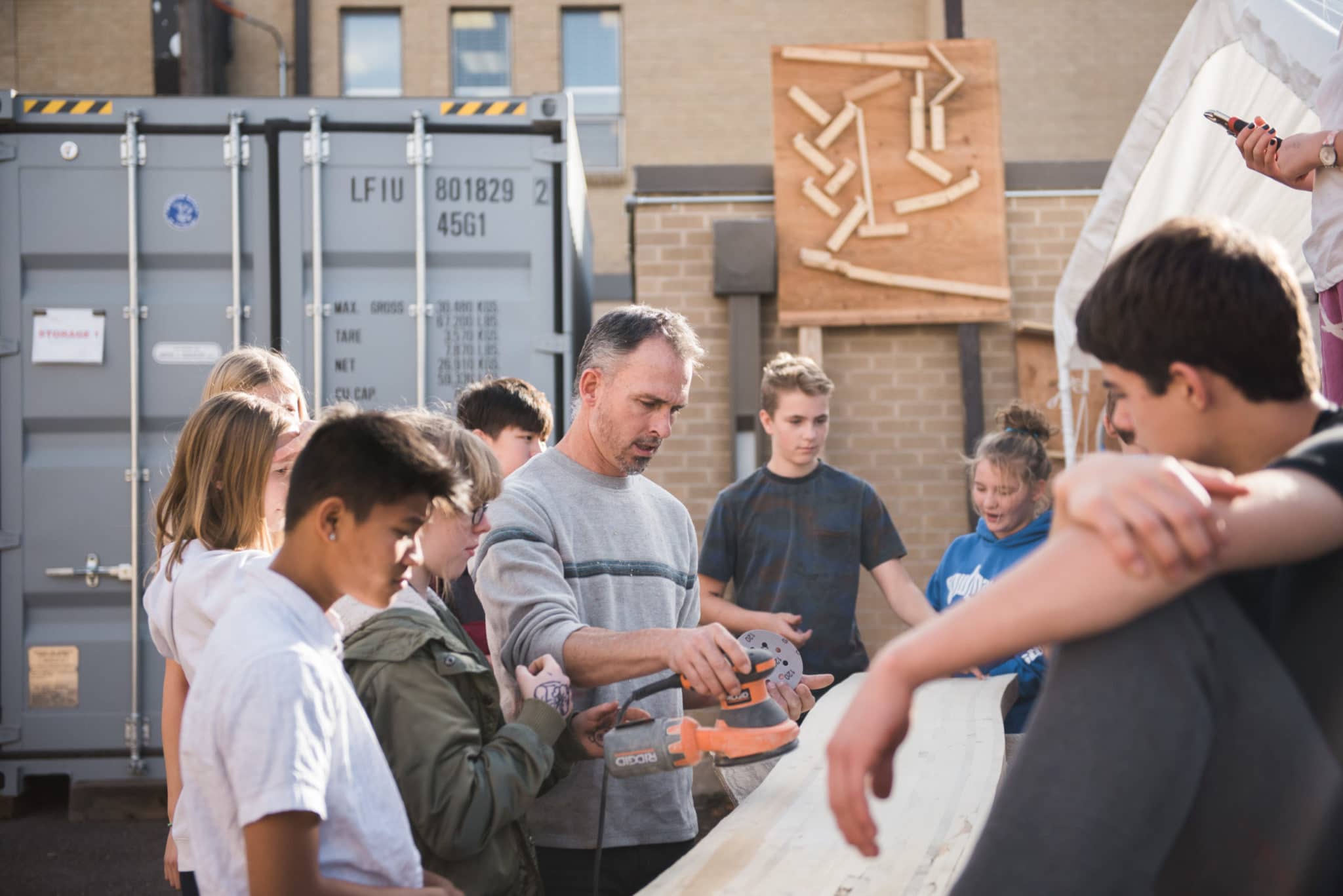
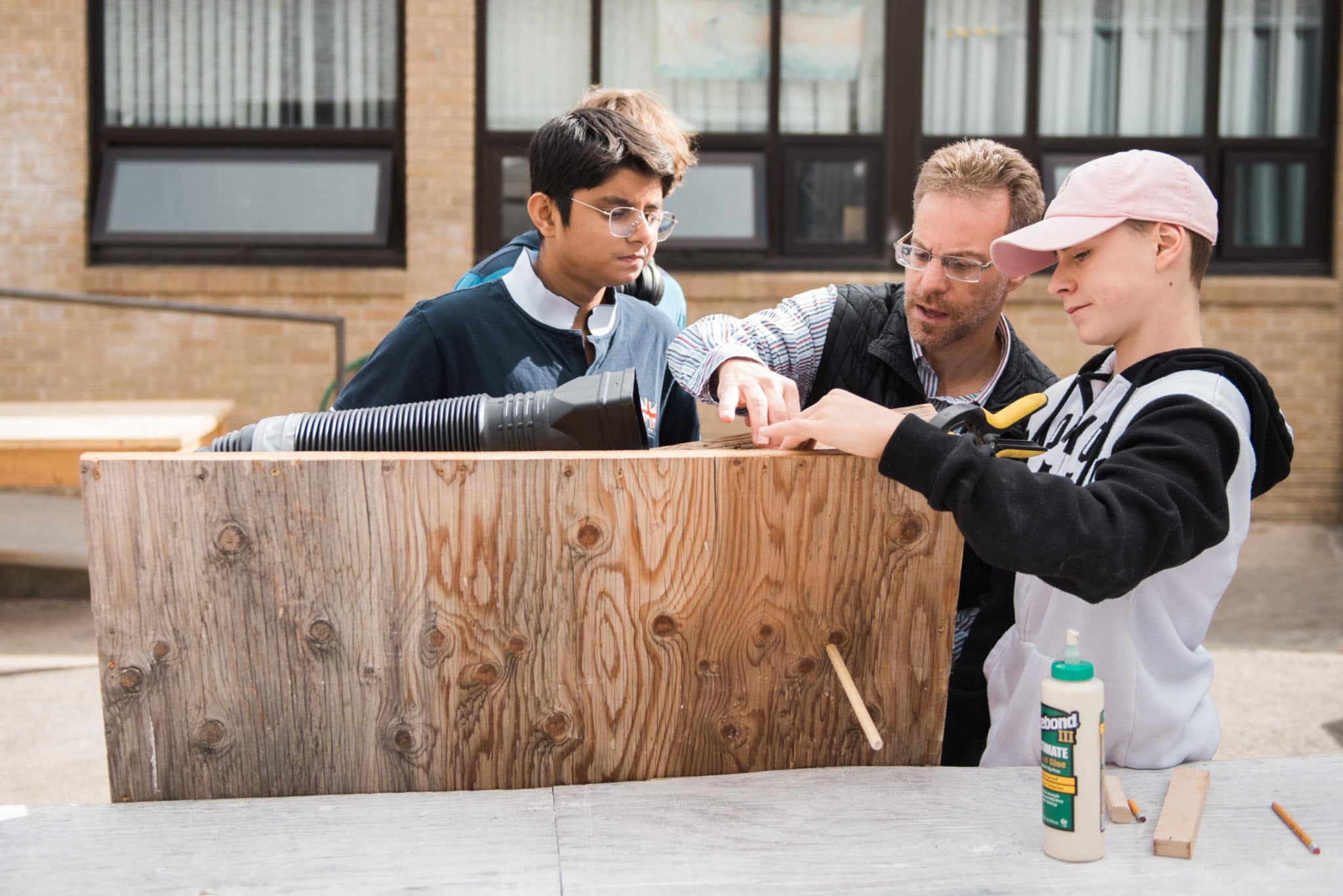
Dr. Wayne Mayer pictured with students building a Rube Goldberg machine during the elective of “The Science of Simple Tools”.
Why We Play - Community & Growth through Sports
In her inspiring book, Norwich: One Tiny Vermont Town’s Secret to Happiness and Excellence, Karen Krouse sets out to answer a simple question: how has one small town in Vermont produced so many resilient, confident, and happy Olympic-level athletes?
The answer may surprise you. It’s not by pushing kids to train harder at a young age; it’s not about embracing hyper-competitiveness; it’s not about making kids specialize in a single sport. Rather, it’s about making sports a fun, communal experience. Krouse explains, “the parents of Norwich learned through trial and error the best methods of nourishing happy athletes: by valuing participation and sportsmanship, stressing fun, community, and self-improvement.”
In many ways, Waldorf education embraces the wisdom set forth in Norwich. Molding an elite athlete is not the end goal; rather, it is a byproduct of a healthy relationship to sports and movement. Beyond just winning, development of character is the emphasized result in the athletic arena.
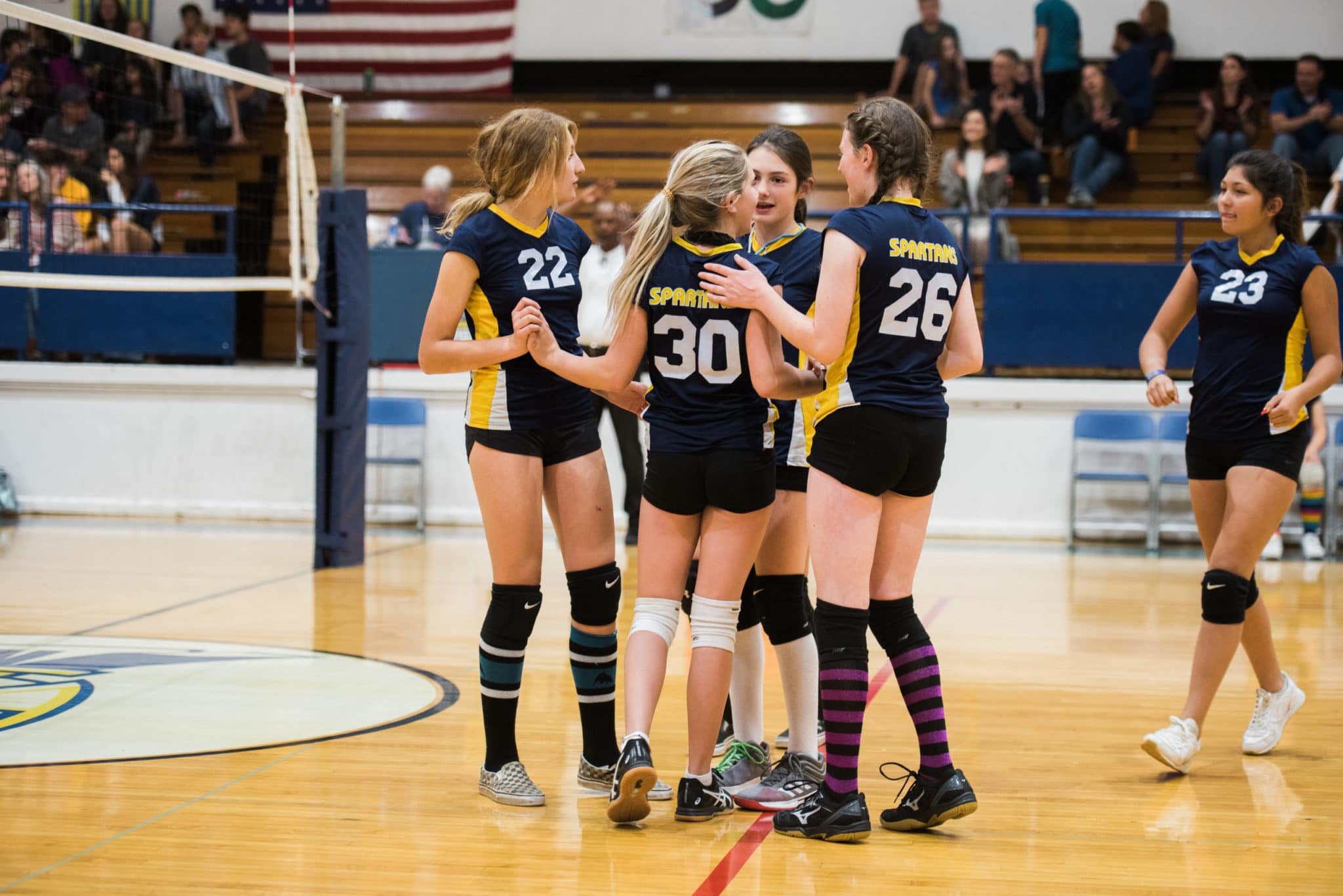
Whether it’s a young student working on balance and coordination through Circus Club, a middle school student learning the value of teamwork on the volleyball court, or a high school athlete flying down the Ultimate Frisbee field, the Denver Waldorf School promotes community, growth, and sportsmanship through athletics. There are no tryouts or cuts. Instead, each athlete is inspired to reach their highest potential, contributing to the team through enthusiasm, hard work, grace, and resilience. Every athlete has their place on our teams.
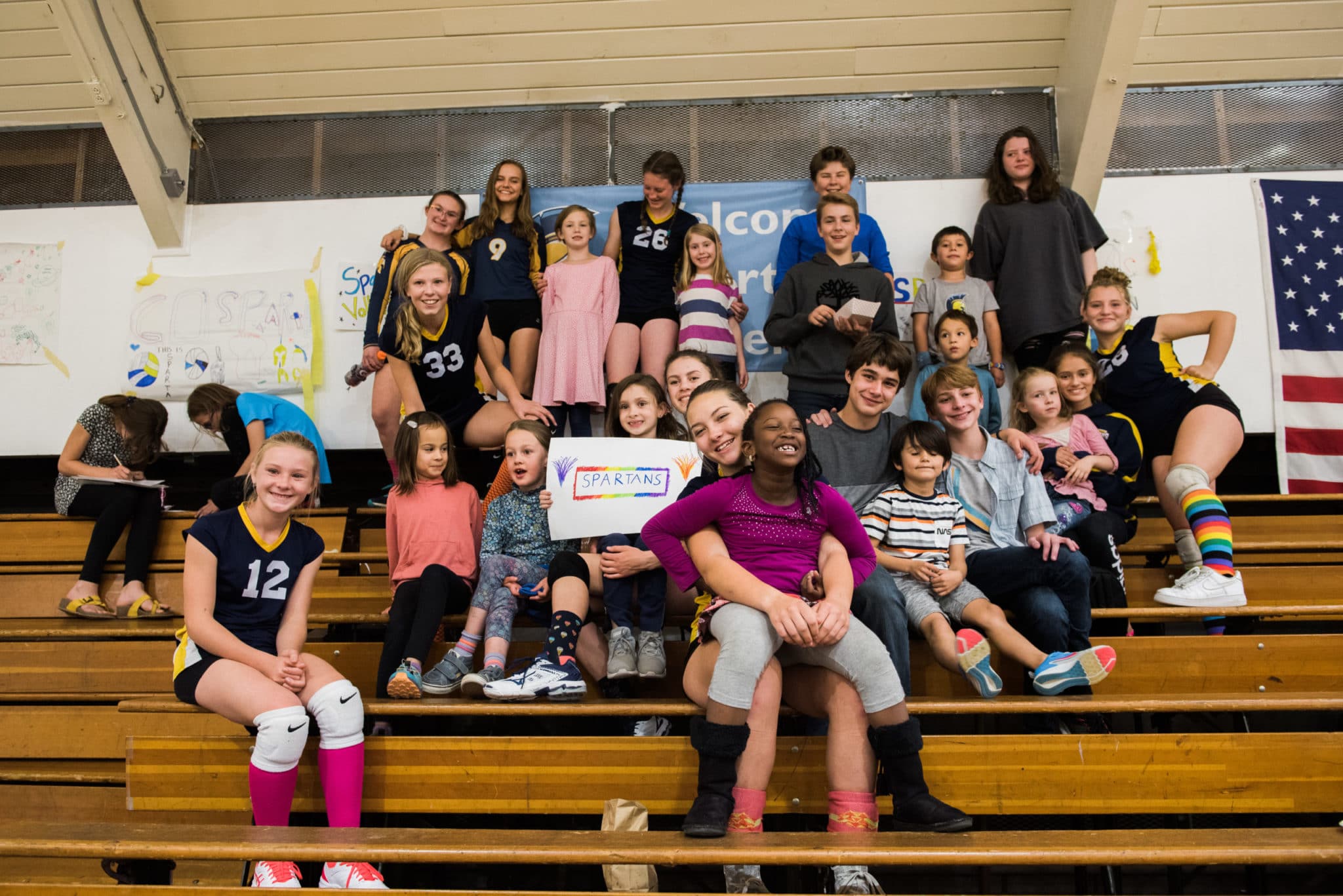
These lessons begin early on. For example, the first graders recently attended a volleyball game to cheer on their eighth grade buddies. With impressionable eyes upon them, the eighth graders displayed poise, confidence, and grace on the volleyball court. The athletes came together in a circle, connected with their arms around each other, after a tough point — won or lost.
On the court, they supported each other, worked together, and afterwards found their first grade buddies. In a word, they built community—the kind of community where young athletes can flourish and grow.
Holding the Question
“Holding the question.” It’s a phrase you may hear from a Waldorf teacher. But what does this mean?
It’s about waiting to answer the question: who is this person? We ask and answer this question all the time — when we meet a new friend, when we meet a teacher, and when we gather as a family. We are constantly scanning the world around us and answering the question: who are all these people in and around my life?
In Waldorf schools, “holding the question” is especially important because the same main lesson teacher stays with a group of students from 1st through 8th grade. It’s tempting for that teacher to answer the question — “who is this student of mine?” — in the first few weeks of first grade.
The concern is, when a teacher answers the question “who is this person” too soon, that teacher limits the student-teacher relationship. Once defined, it’s difficult for the child to shake his or her label, and it’s difficult for the teacher to see that child with fresh eyes.
And that’s why the idea of holding the question is so important. It’s about allowing the child to show his parents, his teachers, his family, and his friends exactly who he is becoming, slowly and over time. It’s about being patient and resisting the urge — however well-intentioned — to define a child too soon.
We know that the temptation to answer the question is strong. We want to know: who is this precious child of ours? What makes him tick? Who will she grow into? All of our hopes and dreams are mashed up into this one question: who are you?
But, perhaps, we can give our children a great gift: holding the question. Perhaps we can let them show us who they are. Perhaps we can give them the space needed to emerge as their own unique individuals. We can enjoy and celebrate them for who they are today, and love them unconditionally as we journey alongside them.
Take an activity like watercolor painting. One young child may quickly spread all of the colors available at one time, watching them blend together as one. Another may pick one color at a time, slowly watching the colors interact and dance.
But what does that say about our kids? Does it have to say anything? We try to hold the question. They are both expressing themselves in their own ways. Their means of expression may change over time, but we hope their curiosity remains. We don’t want to define their artwork and unwittingly limit who we see them as and what they can become.
In a way, our children are the artists of their own lives. We can’t predict what they’ll paint. We’ll let them create something beautiful. And we’ll be there to share in the joy of their own unique journeys.

3 Things You Can Start Doing Now to Keep Your Kids Safe Online
There’s no arguing that modern technology poses a range of dangers to your children’s development and to the value of their relationships. You know your child needs your guidance to develop a healthy relationship with technology, and to learn to regulate their own use in a healthy manner in the long term.
You also know that you must protect your child, especially from more acute threats, until they learn the foundations of self-regulation.
Ideally, your child’s school would partner with you to help you manage technology use and nurture the development of your child’s inner life. But the reality is that screen time and internet exposure is becoming increasingly pervasive in most schools.
The world is becoming increasingly digital. Whether you keep your children on a strict screen-time schedule or allow them to regulate their own time, these tools will help you keep your children safe as they explore the digital world.
Password Manager
Password managers can keep your children from accessing sensitive account information while using your devices, while keeping those accounts accessible to you.
A password manager is digital organizer for all of your online passwords that is stored online and accessed with, well, a password.
The benefit of a password manager is freedom of security. With a password manager you can protect all of your online accounts with strong passwords with the reassurance that you will be able to access your accounts even if you can’t remember each individual password. And that’s great, because the number of password protected accounts we need just to get from one place to another is only increasing.
When deciding on a password manager, you’ll have to determine whether you prefer cloud storage or local storage, which will depend on two things: how much functionality you desire and how paranoid you are. Local storage is a good idea if you’re very worried about a data breach or if you work in a highly sensitive field.
Parental Controls
Nearly every digital device is equipped with parental controls designed to help parents set and enforce limits on screen time, content, and more.
Sometimes, a device’s onboard parental controls simply aren’t enough. In those cases, there is a wide range of third-party controls, which give parents more options and provide greater functionality. Most parental control apps require a yearly paid subscription, so be sure the app you choose is right for your family’s needs.
Parental controls are important on your child’s personal devices, as well as family devices.
Click here for a detailed list of parental control options.
Communicate
Any time you consider restriction, you must also consider how such measures will affect trust between you and your child. Your child needs your trust to transition through to adulthood in a whole, healthy manner. However, this trust must be mutual. Your child must also trust you.
Thus the importance of communication. As a parent, you can’t demand trust. It’s a gradual process that requires mutual commitment and constant communication over time.
“Our highest endeavor must be to develop free human beings who are able of themselves to impart purpose and direction to their lives. The need for imagination, a sense of truth, and a feeling of responsibility—these three forces are the very nerve of education.”
― Rudolf Steiner
We minimize screen time and maximize our students' experience.
Want to see how we do it? Schedule a tour!
3 Defining Attributes of a Waldorf High School Student College Recruiters Can’t Resist
College recruiters are actively seeking Waldorf educated youth for their programs in record numbers. Since the release of this 2015 study published by Stanford University, primary and secondary educators have become increasingly aware of the exceptional quality and deeper learning opportunities of Waldorf education, and increasingly enthusiastic.
This year alone, 94% of graduating seniors at the Denver Waldorf High School have been accepted to high quality postsecondary institutions, earning $4.4M in scholarships.
Waldorf students leave high school with three traits the best colleges and universities are particularly excited about.
Are you looking for a great high school? Take this free checklist with you on your high school tours!
(Click here to download now.)
Self-direction. In a world where change is the only thing we can count on, it’s not enough to wait for instructions. To be successful, one must be able to assess circumstances and direct their own actions. This is so not only for employment, but for life.
A self-directed individual can look beyond the norm to piece together a fulfilling life for themselves based on their own needs and joys. These are the individuals who are least susceptible to mental illness and spiritual fatigue.
Personal Development. Before adulthood, personal development is a physiological function of growth. Later, however, we must actively and consciously endeavor to continue growing toward our best selves.
Waldorf education prepares graduates to strive continuously toward personal growth and development. They’re challenged not only to examine the world around them, but the world within them. And they career this ability into the rest of their life.
Academic Confidence. It’s long been understood that confidence, one’s belief in themselves, is the spice of success. However, overreaching confidence can become detrimental when not focused. Academic confidence is specific. Waldorf high school students are challenged to learn that they can learn. They leave high school confident in their ability to identify problems and investigate solutions.
We know from experience why Waldorf students are in such high demand at the world’s best colleges and universities. But what does the research say?
“One overriding result is that Waldorf students seem more interested to learn and more socially engaged than mainstream students,” according to Bob Dahlin, international academic and author of Rudolf Steiner: The Relevance of Waldorf Education.
Read "How to Choose the Right High School"
But this study isn’t all roses. In his conclusion, Dahlin suggests that while Waldorf students leave high school with a greater likelihood of being driven to continue their education not only immediately in college or university, but throughout their life, they may be behind their peers in fact recitation. He notes in his examination that we may have to choose between fostering wrote memorization of a greater pool of facts, or fewer recitable facts and a greater passion for inquiry.
Higher education administrators appear to have made their choice.
In a world wherein all factual knowledge is accessible instantaneously, fostering the intrinsic drive to discover is the most important trait we can foster in our youth to ensure lifelong success.
Come see how we do it. Schedule a tour of our high school!