

New Family Social
Get to Know The Denver Waldorf Community
Newly enrolled families are invited to an adults-only social on October 22nd at the home of Board of Trustees Chair, Ryan and Tara Gregory, and with appetizers from Little India (owned by a DWS family). Others in attendance include members of the Board of Trustees and the College Leadership Council, DWS faculty, and staff. The DWS New Family Social is a great way to get to know fellow new parents and long-time friends of the school.
Date: Saturday, October 22, 2022
Time: 4-6pm
Please RSVP by October 14th
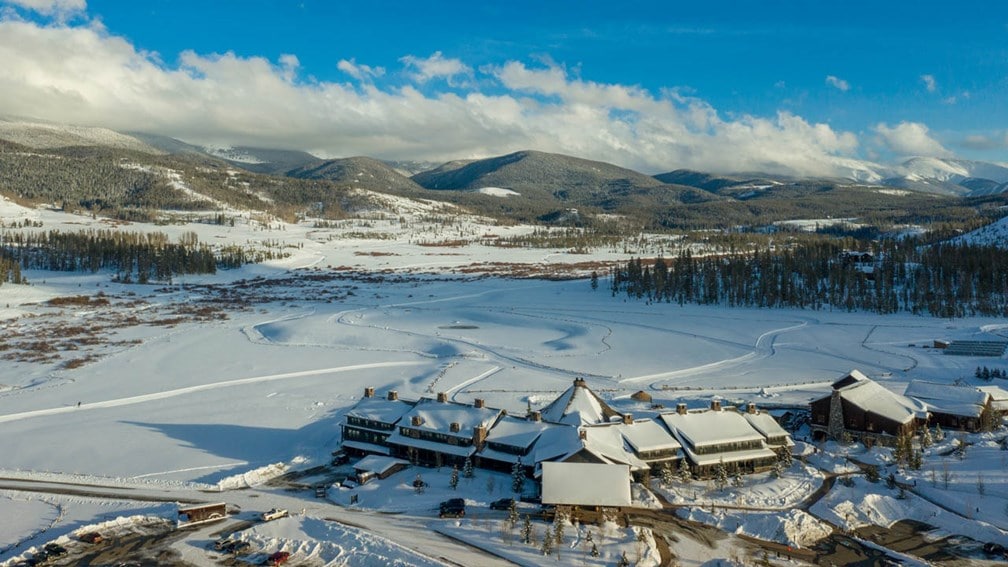
Fall Retreat at Devil's Thumb Ranch
Our fundraising weekend at Devil’s Thumb Ranch returns!
The DWS crew is delighted to bring friends and family back to the ranch for a fun-filled two days and nights! Check out the itinerary below to get ready for the perfect Fall weekend.
Dates: November 12-14, 2021
Time: See itinerary below
Location: Devil’s Thumb Ranch Resort & Spa (3530 County Rd 83, Tabernash, CO 80478)
Please note this event has filled and registration is closed.
Itinerary
Please feel free to pick and choose activities based on your preferences. DWS is happily providing the appetizers during Saturday’s Adult Happy Hour, while guests are free to decide the total cost of food and beverage for their weekend.
Friday evening (11/12)
6-8pm: Welcome Reception at Heck’s Loft—Relax with us before having dinner on your own
Saturday (11/13)
10-11am: Devil’s Thumb Ranch Environmental Tour—Learn all about the sustainable practices at Devil’s Thumb Ranch
1-3pm: Hike led by School Director Kelly Church
1-3pm: Wagon ride trips
3:30-5:30pm: Adult Happy Hour* at Broad Axe Barn—Enjoy delicious appetizers on us before dinner
*Childcare available at Idlewild and in the Game Room
Sunday morning (11/14)
Check out
Childcare on November 13th
Childcare will be available for those between the ages of 2 and 12 years old during the Adult Happy Hour on Saturday from 3:30 to 5:30pm. We’ll have a game room with tons of fun, and we’ll bring entertainment for the littler ones, as well.
What to Bring
As we all know, Colorado weather is unpredictable. Please pack accordingly for the activities in which you wish to participate.
About the DWS Fall Retreat at Devil’s Thumb Ranch
DWS is delighted to have the opportunity to bring community members to the ranch every few years thanks to the generous support of alumni family Bob and Suzanne Fanch! Bob and Suzanne graciously offer a select number of rooms for our family and friends, the value of which they return to the school as a donation. Thus, when families join us for the Fall Retreat, the school benefits through both meaningful connections and gifts. We are incredibly grateful to Bob and Suzanne for this unique experience in an unmatched natural location!
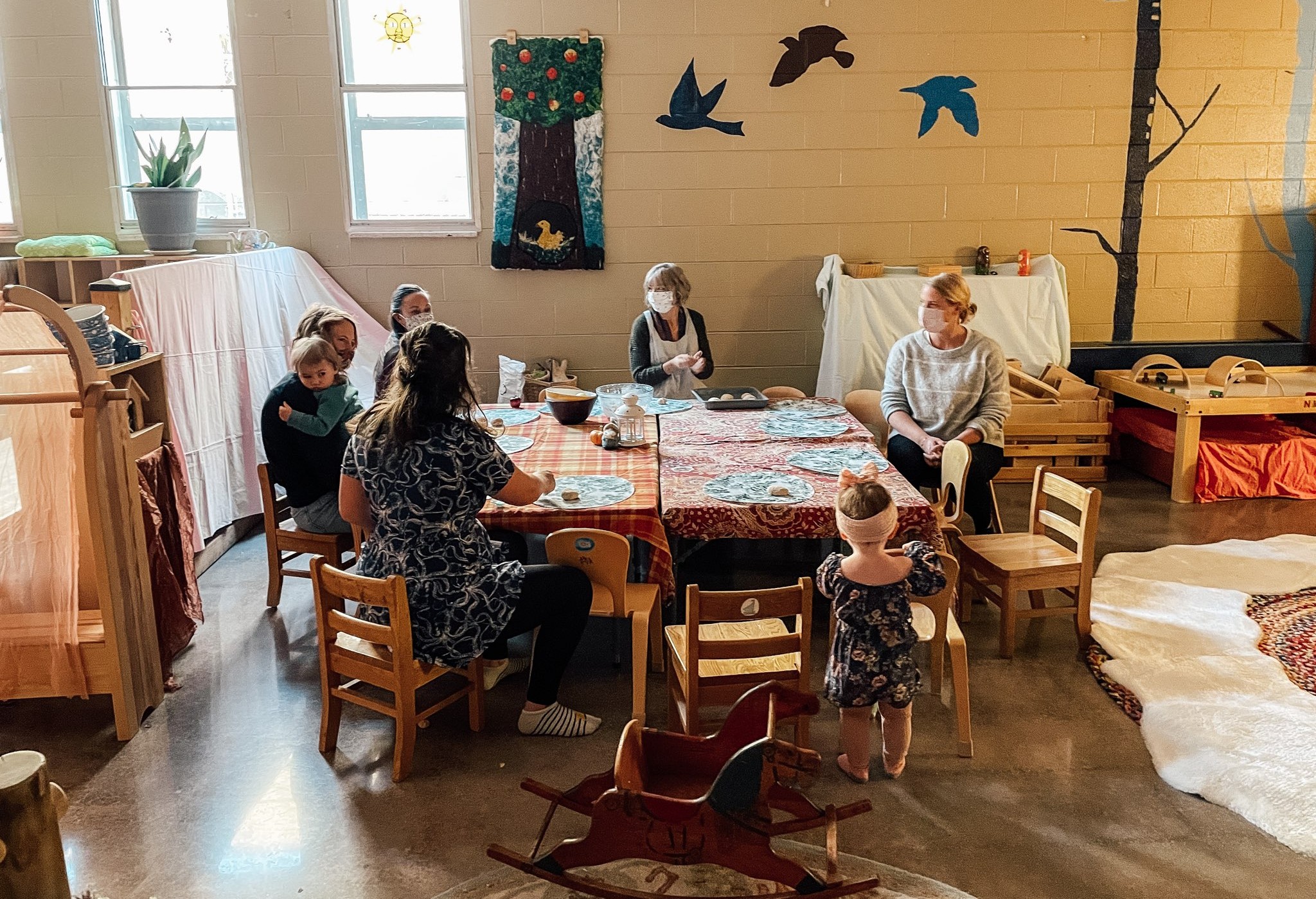
Sweet Peas Parent-Tot Program
Experience Waldorf with Your Wee One
Sweet Peas is an 8-week session for parents and/or caregivers and children 12 months to 2 ½ years old to experience Waldorf. The warm and simple rhythm guides children and their families through activities such as bread baking, sharing songs and puppet plays, taking time for self care, and of course, play! Parents will have the opportunity to join in discussion around child development, rhythm and family life, and embark in seasonal crafting.
22-23 Fall, Winter, and Spring Sessions
Please note registration is now full for the fall session.
This school year’s parent-tot program with Clair Boswell takes place in 3 separate sessions on Wednesdays:
Dates: FULL: Fall Session (9/7/22 – 10/26/22); Winter Session (1/4/23 – 3/1/23); Spring Session (3/15/23 – 5/10/23)
Time: 8:30-10am
Cost: $245
Please fill out the web form to register; we anticipate each session will filling as we can only serve 8 families per session.
About The Denver Waldorf School
The Denver Waldorf School is an urban pre-K through 12 independent school in Colorado. Founded in 1974 on Rudolf Steiner’s humanitarian curriculum, DWS believes education should foster what it is to be human, cultivate lifelong curiosity, and inspire a love for the world. We are currently enrolling for in-person learning:
Want to learn more about us? Learn more about our in-person and virtual events., read our blog, or take a listen to our podcast.
Online Registration
For more information, contact Program Lead Clair Boswell.

Halloween Homecoming
The Denver Waldorf High School Halloween Homecoming is On!
Denver Waldorf High School students are invited to attend Halloween Homecoming complete with hors d’oeuvres , dancing, and activities! Dress up or don a costume! No full-face masks or inflatable garb, please.
Date: October 2nd, 2021
Time: 6:30-10pm
Location: DWS campus
DWS students must register in advance to attend and also submit a health screen on October 2nd prior to attending.
Contact Brie Kaiser and Lucy Lewark with questions.
About The Denver Waldorf High School
The Denver Waldorf High School offers a liberal arts education, consciously aimed to nurture and encourage adolescent ideals. The high school experience aims to balance the students’ academic needs with their longing to find meaning in the world.
Register to Attend by September 29th
About The Denver Waldorf School
Founded in 1974 on Rudolf Steiner’s humanitarian curriculum, DWS believes education should foster what it is to be human, cultivate lifelong curiosity, and inspire a love for the world. Want to learn more about the benefits of Waldorf education? Join us online during one of our many virtual events.
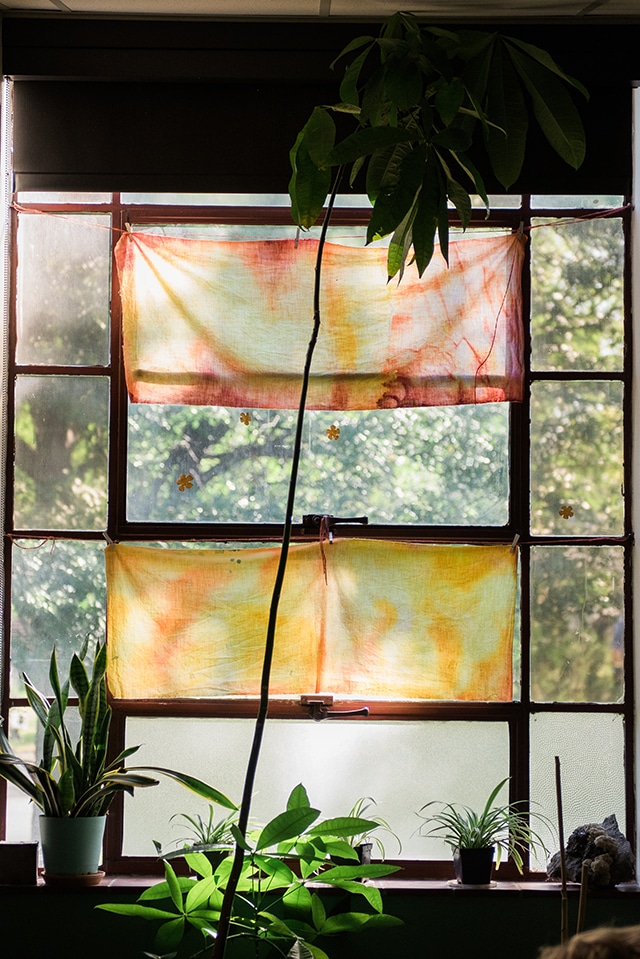
The Calendar of the Soul
“The light from world-wide spaces
Works on within with living power;
Transformed to light of soul
It shines into the spirit depths
To bring to birth the fruits
Whereby out of the self of worlds
The human self in course of time shall ripen.” – Calendar of the Soul by Rudolf Steiner, Verse 22
Every morning, before the school day begins, a bell rings throughout the grade school hallway inviting faculty and staff into one of the classrooms for a reading from The Calendar of the Soul. This book of verses was written by Waldorf education’s founder, Rudolf Steiner, to mark the course of the year and the interplay between the outer world around us and the inner world of ourselves. As teachers, it is a reminder of the forces that are at work around us, out of our control, and the possible inner forces that we can awaken within us, that is what is within our control. Despite what Denver’s consistently high temperatures may indicate, summer is drawing to a close. The days shorten, the light descends, and cold creeps in. These things we cannot change. What the verse above does indicate is that we have an opportunity to take the strength of sun, its light, and ensoul it within us. If we transform from passive recipients of light, to active bearers of light we can develop new capacities even as the world grows dim and cold.
As teachers, we know that we cannot control another person, even a child, and nor should we. All we can control is ourselves. So when we prepare for the day, we are chiefly preparing ourselves. The students will bring with them all multitudes of unknowns, and we must be prepared to meet those unknowns–yes with outer preparedness of lessons, but also with inner preparedness of soul.
Parenting is much the same. Just when you think you know your child, they go ahead and change. They grow, they transform, they regress, they display new behaviors begging new questions. All of this is inevitable. Change is certain.
So how do we prepare ourselves to meet our burgeoning, changing children?
We can do so in the same way that the teacher prepares for a class of children.
Steiner shines a light on this situation more broadly, beyond the realm of teaching or parenting, into the realm of anything that is unknown:
“…feelings of fear and anxiety that gnaw at our soul-life in face of the unknown future:
Is there anything that can give the soul a sense of security in this situation?
Yes, there is.
It is what we may call a feeling of humbleness towards anything that may come towards the soul out of the darkness of the future.
But this feeling will be effective only if it has the character of prayer. Let us avoid misunderstanding. We are not extolling something that might be called humbleness in one sense of another; we are describing a definite form of it: Humbleness towards whatever the future may bring.
Ideally, it would mean saying to oneself: Whatever the next hour or the next day may hold, I cannot change it through fear or anxiety, for it is not yet known. I will therefore wait for it with complete equanimity and peace of mind.
Anyone who can meet the future in this calm, relaxed way, without impairing his active strength and energy, will be able to develop the powers of his soul freely and intensively.”
If we develop this feeling of humbleness beforehand, by taking just a few quiet minutes in the morning, then we can respond with more freedom of thought and action in the moment. We can take a moment to really ask ourselves, “What is happening here? Why is this happening? What is this moment asking of me?” And then, without panic or worry, we can respond.
I would say that complementary to humbleness, a kind of bookend, is grace. Our lives are made of countless little moments, little actions. In the middle of it, each moment seems incredibly large, to where if we get really overwhelmed, we have a kind of tunnel vision. Nothing else exists in that moment: nothing to the left, right, up, down, behind me. All that there is is right in front of me and time stands still. Yet of course that is not true. Time rolls on, the world around me continues, and this moment itself is fleeting.
We can gain this kind of perspective by practicing a simple exercise, common among Waldorf teachers, of the daily review. Here is one way Steiner describes it:
“Being able to look at our experiences, joys, and sorrows as if they belonged to someone else is a good preparation for spiritual training. We can gradually gain this ability by taking time after work each day to allow images of the day’s experiences to pass before us in spirit. We should see ourselves in images within these experiences. In other words, we must look in on ourselves in our daily lives as if from outside. We can gain an aptitude for this kind of self-observation if we begin by visualizing small isolated portions of our daily lives. With practice, we become increasingly skillful in this retrospective view, and after considerable repetition, we can quickly form a complete picture.”
Doing this, we can gain perspective over events that happened in a more impersonal way. Perhaps we could have done something better, and now we know for next time. Perhaps that event had to unfold that way, no matter our actions. But similar to not getting anxious about the future, we strive to not dwell on the past. We accept the opportunity to learn, resolve for the future, and leave the past. In this way, we can continue striving to meet our students or our children in the present moment.
Written by Education Director, Vernon Dewey
You can also listen to our podcast episode discussing this topic on Spotify here.

College Nights
College Nights—Application Process 101
Parents and students are invited to attend the first evening of our 6-part College Nights series with DWS College and Post-Secondary Guidance Counselor Laura Shope.
Topic: Application Process 101—What to expect and when
Date: October 7th, 2021
Time: 6:30pm MT
Location: In person in the Orchestra Room
Please register once to reserve a seat for all six dates.
What You’ll Learn
In this interactive evening, we will explore the college application process, including understanding the phases of the process, identifying all the components of the college application, how each component makes up the whole, and how colleges review the application. We will also go into detail on the timing of each phase of the process and briefly discuss how best to support your student now for what is relevant to them. Key takeaways include:
- Peace of mind knowing more about the process
- Knowing where to direct your high school student’s focus and energy now
- Understanding the relevance of each part of the application and your student’s role in each part
About College Nights
Our monthly College Nights series focuses on different aspects of the college and post-secondary application process. Laura Shope designed each evening to answer questions and support parents and students in the college application process. These meetings are open to all, although probably most useful to the grade listed with each topic.
- October 7th—Application Process 101 (Grades 10 and 11)
- November 4—SAT and ACT (Grades 10 and 11)
- December—No meeting
- January 6—Supporting Your Student through the Process (Grades 10 and 11)
- February 3—Paying for College (Grades 10 , 11, and 12)
- March 3—Making Choices (Grades 10 and 11)
- April 21—College Engagement and Success (Grade 12)
- May 4—Preparing to Apply & Making the Most of Summer (Grade 11)
About Laura Shope
Laura Shope came to DWS in 2021 via the Rudolf Steiner School of Ann Arbor, where she served as the High School Student Support Coordinator and High School Administrator for the past three years, and a parent in the Waldorf community for more than 17 years. She has extensive training in career development and personal coaching, along with having recently completed her Waldorf High School Teacher Training through the Center for Anthroposophy. Her plans for working with our students and faculty include creating a rich program of self-reflection, support, and clarity around the decisions the students make for their plans after high school.
Laura is a passionate artist and works with stone, clay, wood, weaving, and plaster to create abstract forms. She and her husband, Dale Jensen, are outdoor enthusiasts and look forward to exploring all that Colorado has to offer. They have two sons, Wilder and Corbin, who attended Waldorf schools from preschool through grade 12 (Corbin will graduate from RSSAA in 2022).
About The Denver Waldorf High School
The Denver Waldorf High School offers a liberal arts education, consciously aimed to nurture and encourage adolescent ideals. The high school experience aims to balance the students’ academic needs with their longing to find meaning in the world. Scroll down to hear from a few of our faculty members.
Engaging Body, Intellect, and Emotion
At the start of each day, movement helps spark students’ circulation and bring them together. They then engage in a long, uninterrupted seminar (referred to as main lesson in elementary and middle school) to activate their minds, followed by music and elective classes to spark emotional expression. Music classes and elective courses promote the development of healthy emotional expression through creation.
High School Music
Regarding music, all high school students participate in chorus, with the option to participate in either music ensemble or orchestra until their senior year. Students new to DWS and who have not played their instrument before are strongly encouraged to take private lessons.
Hands-On Learning of Real-World Skills
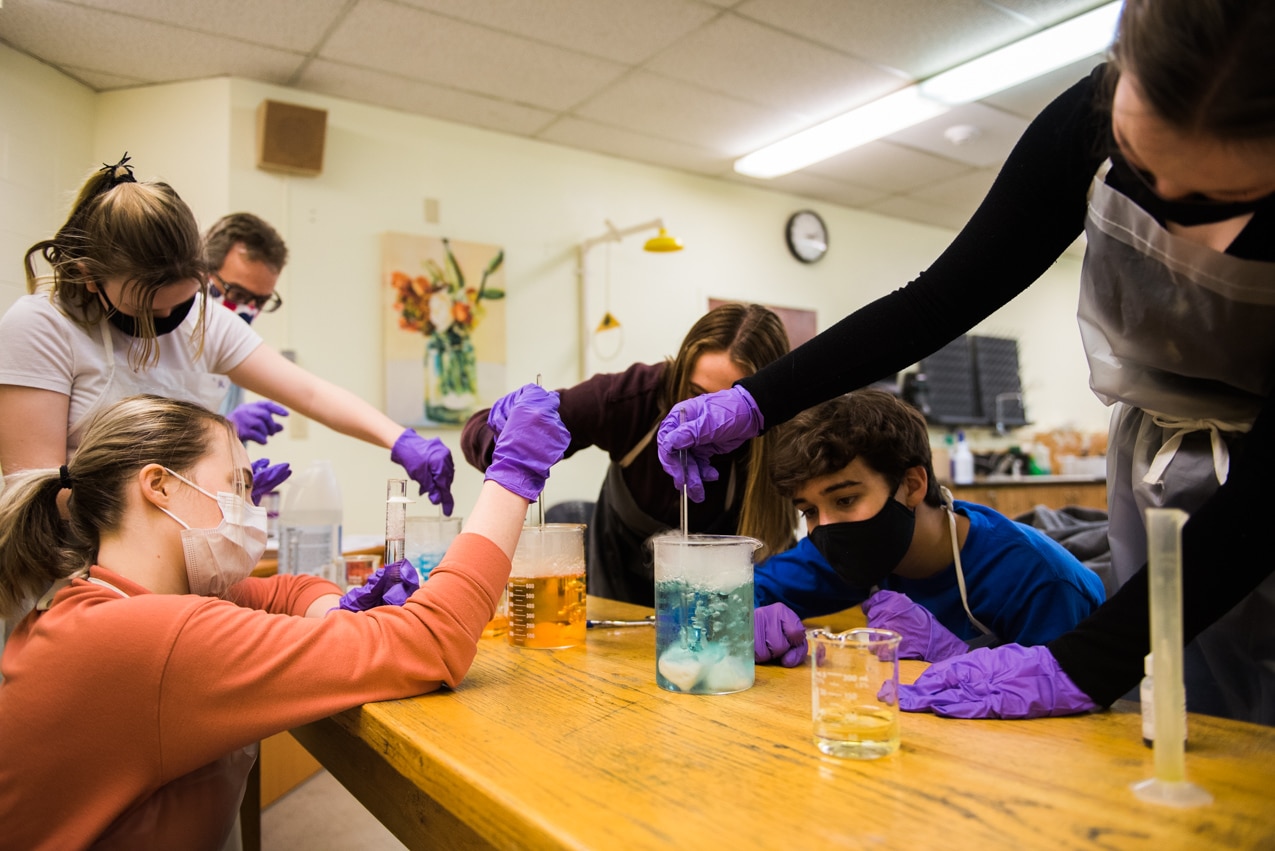
Students apply what they’ve learned theoretically to scenarios in the real world. For example, a study of soil composition could be applied to a chemistry lesson on acids and bases, as well as a close reading of The Grapes of Wrath, and a course in black-and-white photography in which they learn to develop their own film.
Rhythm of Thinking, Feeling, and Willing
Our goal is to expose our high school students to academic wealth, and demonstrate to them that all knowledge is valuable to encourage their pursuit of wisdom throughout life.
The high school curriculum revisits themes and subjects periodically to strengthen functional knowledge. Students cultivate their ability to think critically, organize ideas and information, and clearly present thoughts through an academically challenging mix of math, English, humanities, physics, life sciences, chemistry, world language, practical, industrial and fine arts, chorus, orchestra, drama, and physical education.
About The Denver Waldorf School
The Denver Waldorf School is an urban pre-K through 12 independent school in Colorado. Founded in 1974 on Rudolf Steiner’s humanitarian curriculum, DWS believes education should foster what it is to be human, cultivate lifelong curiosity, and inspire a love for the world. We are currently enrolling for in-person learning:
Want to learn more about us? Schedule an in-person tour of our Denver campus or join us online during our virtual events.
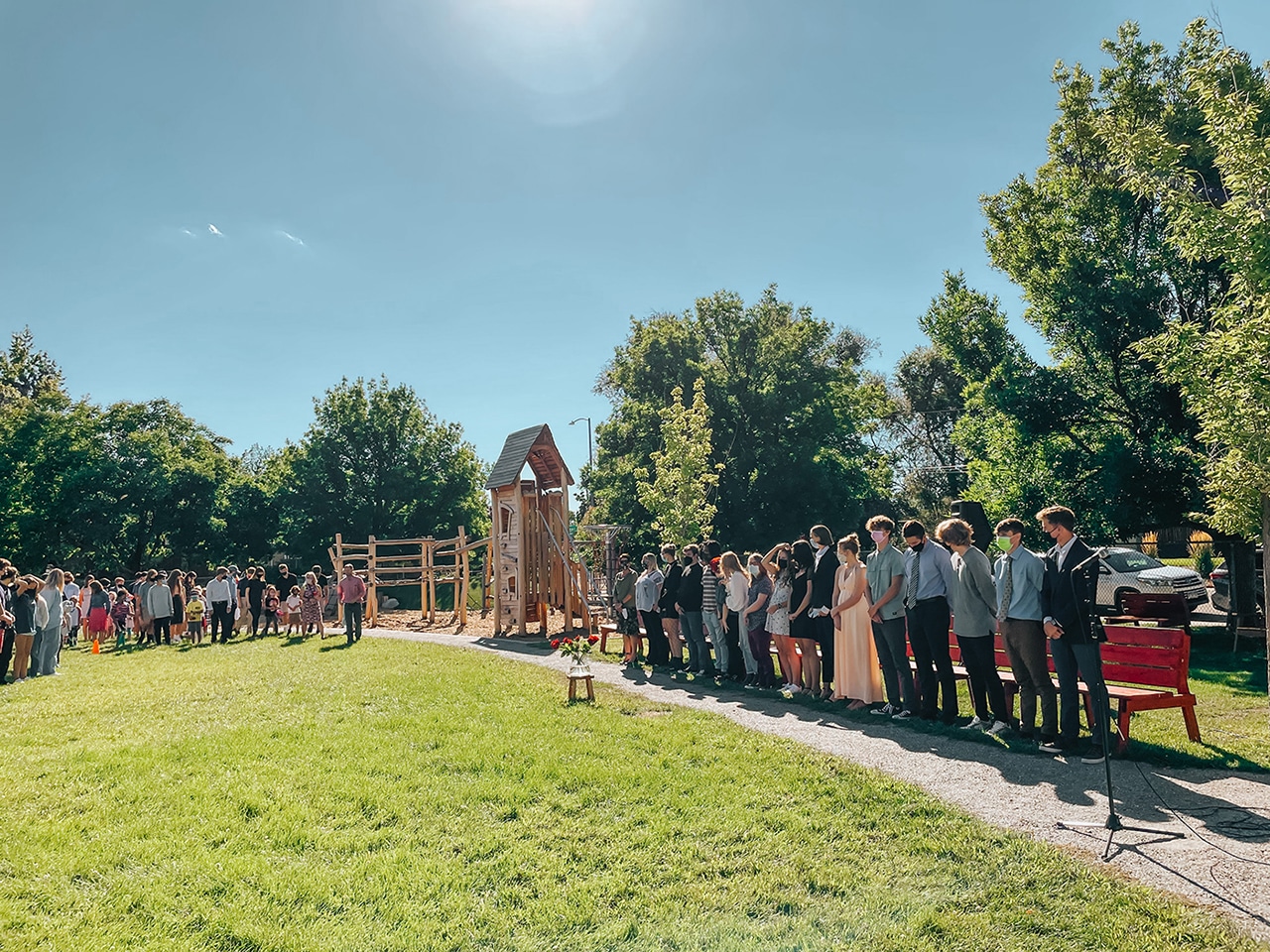
The Rose Ceremony - a Waldorf School Tradition
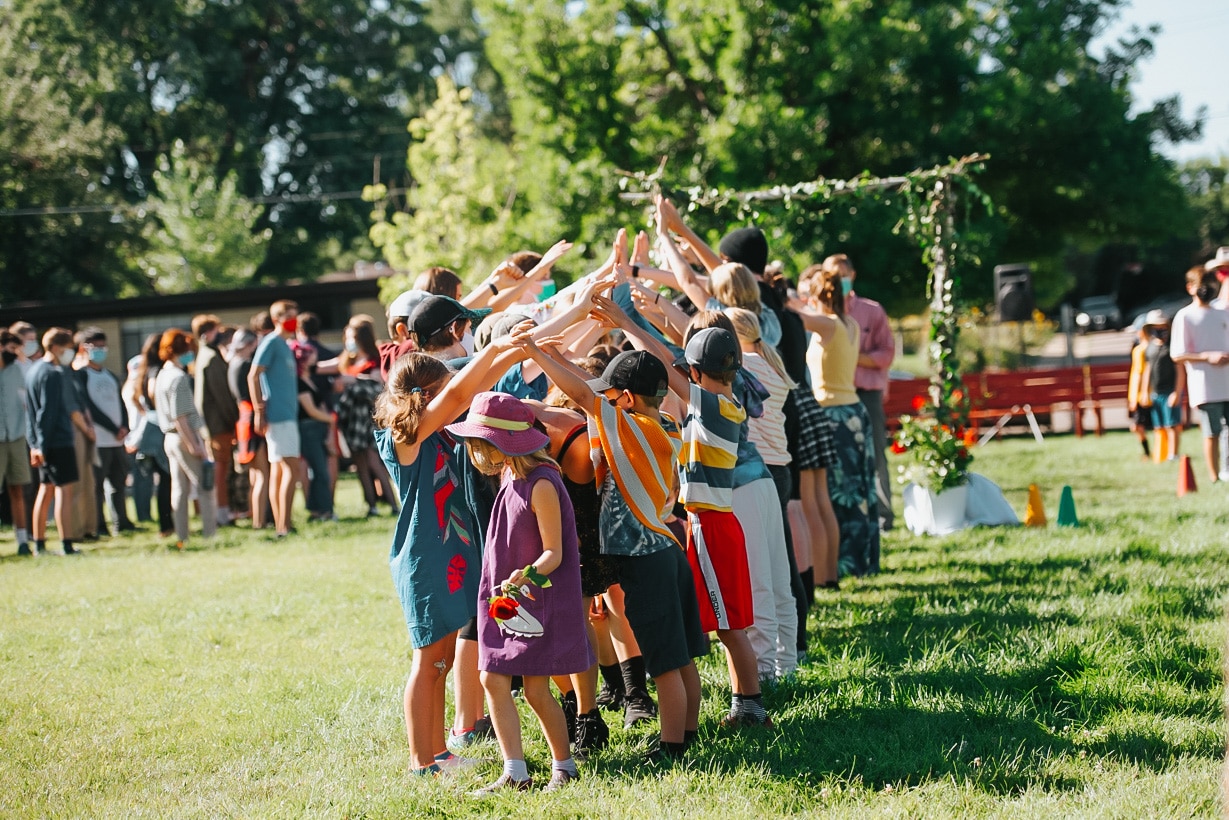
The sun shines behind a row of seniors, sitting confidently on benches facing a semicircle of students and teachers with eager, expectant faces. 8th graders stand in the wings, some shift from foot to foot, others try to remain standing, straight and ready. 1st graders nuzzle or squirm on their parents’ laps. A vase of roses lies center stage before the seniors.
Every year we begin and end the year with the Rose Ceremony, an event that marks the transition from one stage of life to another. Foundational to Waldorf education is the understanding of human development and its phases. One principle of human development is the seven year phases of life: birth to 7, 7 to 14, 14, to 21. In the Rose Ceremony, we see each of these phases represented as the kindergartener enters 1st grade, the 8th grader enters high school, and the senior enters adulthood (though it should be noted that they’ve got 3 more years until age 21). Three ideals live within each seven year period: goodness, beauty, and truth.
From when a child is born, up through our early childhood program, the child is most nourished by a sense that the world is good. We cultivate this sense of goodness through the loving affection of the teachers, through stories, and through the very daily environment the children experience with their senses. The teacher carries on the parents’ loving gaze and the constant devotion to the child’s well being. Hugs each morning, snuggles on the rocking chair, a nice back rub when settling down for a nap all let the child know that they are loved and in a good, safe place.
Rudolf Steiner describes how during the first seven years the young child nearly “breathes in the whole character of the environment.” Largely unconsciously, the young child directly experiences the physical world and the moral quality behind it. During these years the child unconsciously seeks to develop their lower senses: touch, smell, balance, movement, and life. It is sufficient to say that the child has an innate drive to explore with these senses because they develop a foundational understanding of the world around them, and through that experience of the world, they experience themselves. When we create an environment with a natural diversity of sense experiences, then this innate drive is satisfied, and they experience the world as good. In this way, the kindergarten teacher is like the gardener. The gardener creates an environment that encourages the plant to grow by providing the right soil, the right amount of water, and the right amount of sunlight. The seed was always seeking to grow, this is innate, and the gardener simply helps the plant fulfill its destiny.
When the child enters first grade, Steiner says, “The next seven years are spent not so much breathing in the environment, but listening to what it has to say.” In these years between first and eighth grade, the teacher is a mediator between the child and the world. This is why storytelling is so important in our curriculum. The spoken and written word help guide the students through an understanding of the world, and through the word, and through the teachers, the students develop a feeling that the world is beautiful. The world may not always be good, and this is something that the teacher helps reveal as well, but in the world beauty persists. The teacher’s relationship with the world helps the student develop a healthy relationship with the world. Without a relationship, the world is incoherent and causes anxiety. Through the teacher’s artistic teaching, the student sees that the world is ordered, is coherent, and that they belong.
Of course, the natural authority of the adult erodes with time in order to make room for the authority of the students themselves. High school is when the student can no longer experience truth through the teacher, but only through their own conscious thinking activity. The students must use their physical senses to observe without judgment and to think clearly about these experiences in order to develop concepts free from external influences. What the teacher does provide is an environment and a means for investigating the “riddles of the world,” as Steiner refers to them. The teacher helps “awaken within them an extraordinarily great interest in the world outside of themselves.” The student should have confidence that their teacher has access to the answer, but the teacher guides rather than imposes.
Through these three phases, we help cultivate in our students the ability to not only sense goodness, beauty, and truth, but also to be bearers of them out in the world. When they stand on the stage and receive their high school diploma they look out into the world with confidence and love.
Written by Education Director, Vernon Dewey
To learn more about the Rose Ceremony and how Waldorf education brings truth, beauty, and goodness into the classroom, you can listen to our podcast episode covering this topic here.
Experience Waldorf: A Morning in Our High School for Prospective Families
Experience The Denver Waldorf High School
Journey into The Denver Waldorf High School for a morning where you’ll experience a taste of our curriculum, and begin understanding how it integrates academics, arts, and athletics in educating the whole student. Our high school offers a liberal arts education, consciously aimed to nurture and encourage adolescent ideals. The high school experience aims to balance the students’ academic needs with their longing to find meaning in the world.
Date: November 11, 2021
Time: 11am to 12:30pm MT
Location: 2100 S. Pennsylvania St., Denver, CO 80210
Can’t make our November morning? We’re hosting another in December that covers thermodynamics, environmental science, Parzival, and transcendentalism.
Morning Schedule
During your morning at The Denver Waldorf High School, you will experience:
- Story of Drama
- Civics & Constitution
- Embryology
- Data Science
Then, we will wrap up with a Q&A session with Education Director Vernon Dewey and Admissions Manager Brooke Camfield.
Reserve Your Spot
Experience Waldorf only allows for small groups. Please register to reserve your spot and notify us if you need to cancel. Please also note that, due to the changing Covid-19 climate, this offering might shift to meet the most recent guidance. Masks required.
About The Denver Waldorf High School
The Denver Waldorf High School offers a liberal arts education, consciously aimed to nurture and encourage adolescent ideals. The high school experience aims to balance the students’ academic needs with their longing to find meaning in the world.
Engaging Body, Intellect, and Emotion
At the start of each day, movement helps spark students’ circulation and bring them together. They then engage in a long, uninterrupted seminar (referred to as main lesson in elementary and middle school) to activate their minds, followed by music and elective classes to spark emotional expression. Music classes and elective courses promote the development of healthy emotional expression through creation.
High School Music
Regarding music, all high school students participate in chorus, with the option to participate in either music ensemble or orchestra until their senior year. Students new to DWS and who have not played their instrument before are strongly encouraged to take private lessons.
Hands-On Learning of Real-World Skills
Students apply what they’ve learned theoretically to scenarios in the real world. For example, a study of soil composition could be applied to a chemistry lesson on acids and bases, as well as a close reading of The Grapes of Wrath, and a course in black-and-white photography in which they learn to develop their own film.
Rhythm of Thinking, Feeling, and Willing
Our goal is to expose our high school students to academic wealth, and demonstrate to them that all knowledge is valuable to encourage their pursuit of wisdom throughout life.
The high school curriculum revisits themes and subjects periodically to strengthen functional knowledge. Students cultivate their ability to think critically, organize ideas and information, and clearly present thoughts through an academically challenging mix of math, English, humanities, physics, life sciences, chemistry, world language, practical, industrial and fine arts, chorus, orchestra, drama, and physical education.
About The Denver Waldorf School
The Denver Waldorf School is an urban pre-K through 12 independent school in Colorado. Founded in 1974 on Rudolf Steiner’s humanitarian curriculum, DWS believes education should foster what it is to be human, cultivate lifelong curiosity, and inspire a love for the world. We are currently enrolling for in-person learning:
Want to learn more about us? Learn more about our in-person and virtual events, read our blog, or take a listen to our podcast.
Experience Waldorf: A Morning in Our Middle School for Prospective Families
Experience The Denver Waldorf Middle School
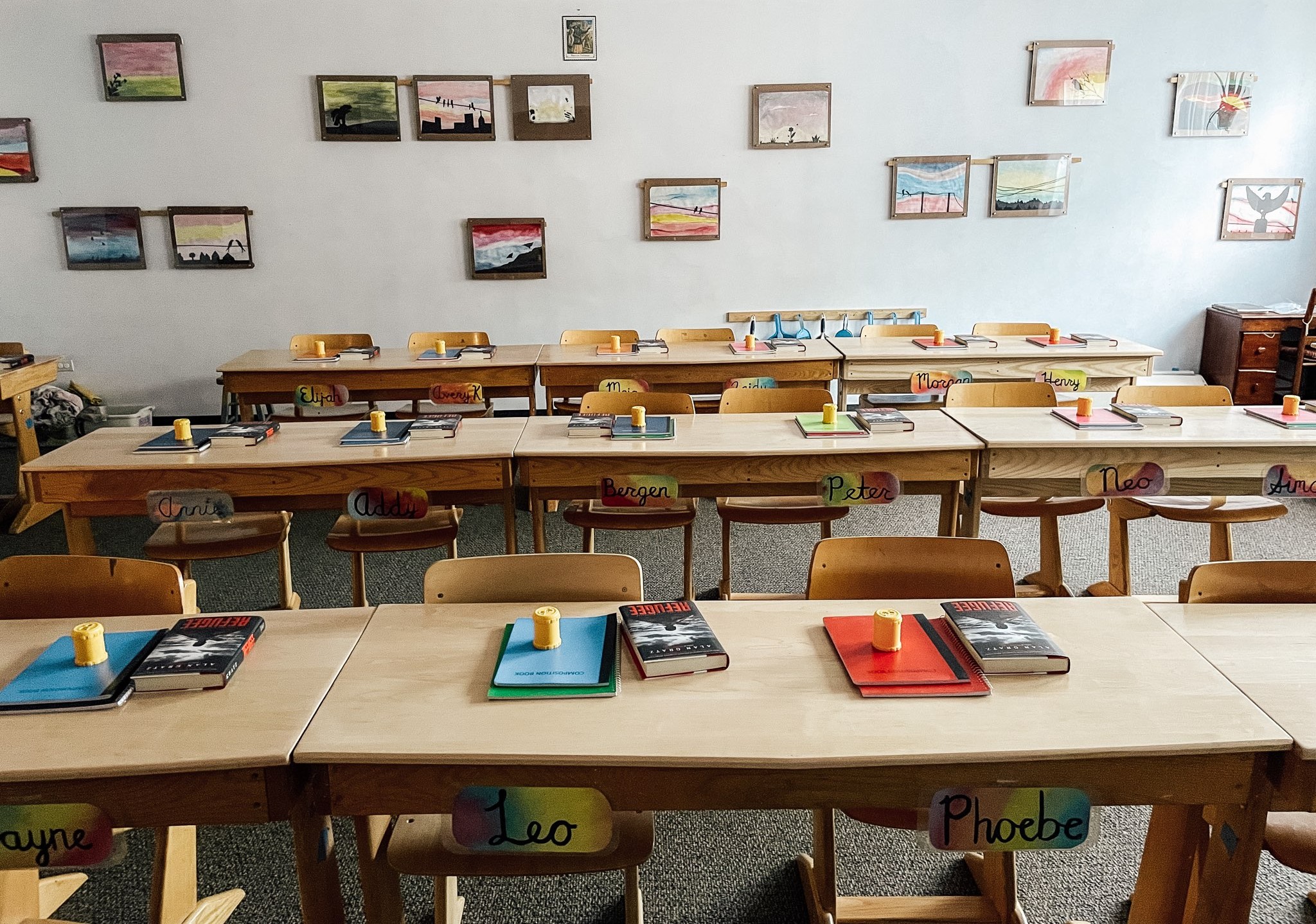
Waldorf education meets middle school students where they are in one of the most fascinating times in their lives. Journey into our school for a morning where you’ll experience a taste of our curriculum, and begin understanding how it integrates academics, arts, and athletics in educating the whole student.
Date: November 10, 2021
Time: 9-10:30am MT
Location: 2100 S. Pennsylvania St., Denver, CO 80210
Morning Schedule
During your morning at The Denver Waldorf Middle School, you will explore main lesson with:
- 6th Grade with Charlie Orphanides
- 7th Grade with Ben Reynolds
- 8th Grade with Keenan Hand
- Middle school math with Iliana Flefel
- World languages with Mckenna Fuentes
Then, we will wrap up with a Q&A session with Education Director Vernon Dewey and Admissions Manager Brooke Camfield.
Reserve Your Spot
Experience Waldorf only allows for small groups. Please register to reserve your spot and notify us if you need to cancel. Please also note that, due to the changing Covid-19 climate, this offering might shift to meet the most recent guidance. Masks required.
About The Denver Waldorf Middle School
6th Grade: The spirit of conquest and the rule of law
A time of collaboration, self-direction, grounding, and emerging, sixth grade marks the emergence of adolescence and the struggle between light and dark. Sixth graders take the first step toward critical thinking as they study Roman civilization and the Middle Ages, as well as astronomy, physics, and mineralogy — subjects met with discernment and insight to encourage a healthy interest in, and compassion for, the world.
7th Grade: Questing into the unknown
Looking outward while feeling inward, seventh graders are expressive and forceful, challenging authority and exploring limits. They seek to assert independence and find their place, while remembering to provide light for those behind them. During this time of discovery, resistance, optimism, chaos, and order, we explore the Renaissance and examine truth and beauty via scientists, religious reformers, and artists.
8th Grade: Extending one’s horizons
By eighth grade, students have gained a well-rounded general picture of humanity and the universe. It is a time of self-confidence, interest in the world, self-love, and service to others. The elementary education has engaged their hearts, wills, and minds, forming the basis for real learning throughout their lives. The final year of elementary school brings previous experiences to a new peak, enabling students to enter fully and potently into their own time.
About The Denver Waldorf School
The Denver Waldorf School is an urban pre-K through 12 independent school in Colorado. Founded in 1974 on Rudolf Steiner’s humanitarian curriculum, DWS believes education should foster what it is to be human, cultivate lifelong curiosity, and inspire a love for the world. We are currently enrolling for in-person learning:
Want to learn more about us? Learn more about our in-person and virtual events, read our blog, or take a listen to our podcast.
Experience Waldorf: A Morning in Our Middle School for Prospective Families
Experience The Denver Waldorf Middle School
Waldorf education meets middle school students where they are in one of the most fascinating times in their lives. Journey into our school for a morning where you’ll experience a taste of our curriculum, and begin understanding how it integrates academics, arts, and athletics in educating the whole student.
Date: October 13, 2021
Time: 9-10:30am MT
Location: 2100 S. Pennsylvania St., Denver, CO 80210
Morning Schedule
During your morning at The Denver Waldorf Middle School, you will explore main lesson with:
- 6th Grade with Charlie Orphanides
- 7th Grade with Ben Reynolds
- 8th Grade with Keenan Hand
- Middle school math with Iliana Flefel
- World languages with Mckenna Fuentes
Then, we will wrap up with a Q&A session with Education Director Vernon Dewey and Admissions Manager Brooke Camfield.
Reserve Your Spot
Experience Waldorf only allows for small groups. Please register to reserve your spot and notify us if you need to cancel. Please also note that, due to the changing Covid-19 climate, this offering might shift to meet the most recent guidance. Masks required.
About The Denver Waldorf Middle School
6th Grade: The spirit of conquest and the rule of law
A time of collaboration, self-direction, grounding, and emerging, sixth grade marks the emergence of adolescence and the struggle between light and dark. Sixth graders take the first step toward critical thinking as they study Roman civilization and the Middle Ages, as well as astronomy, physics, and mineralogy — subjects met with discernment and insight to encourage a healthy interest in, and compassion for, the world.
7th Grade: Questing into the unknown
Looking outward while feeling inward, seventh graders are expressive and forceful, challenging authority and exploring limits. They seek to assert independence and find their place, while remembering to provide light for those behind them. During this time of discovery, resistance, optimism, chaos, and order, we explore the Renaissance and examine truth and beauty via scientists, religious reformers, and artists.
8th Grade: Extending one’s horizons
By eighth grade, students have gained a well-rounded general picture of humanity and the universe. It is a time of self-confidence, interest in the world, self-love, and service to others. The elementary education has engaged their hearts, wills, and minds, forming the basis for real learning throughout their lives. The final year of elementary school brings previous experiences to a new peak, enabling students to enter fully and potently into their own time.
About The Denver Waldorf School
The Denver Waldorf School is an urban pre-K through 12 independent school in Colorado. Founded in 1974 on Rudolf Steiner’s humanitarian curriculum, DWS believes education should foster what it is to be human, cultivate lifelong curiosity, and inspire a love for the world. We are currently enrolling for in-person learning:
Want to learn more about us? Learn more about our in-person and virtual events, read our blog, or take a listen to our podcast.