
What's Up With Looping in Waldorf?
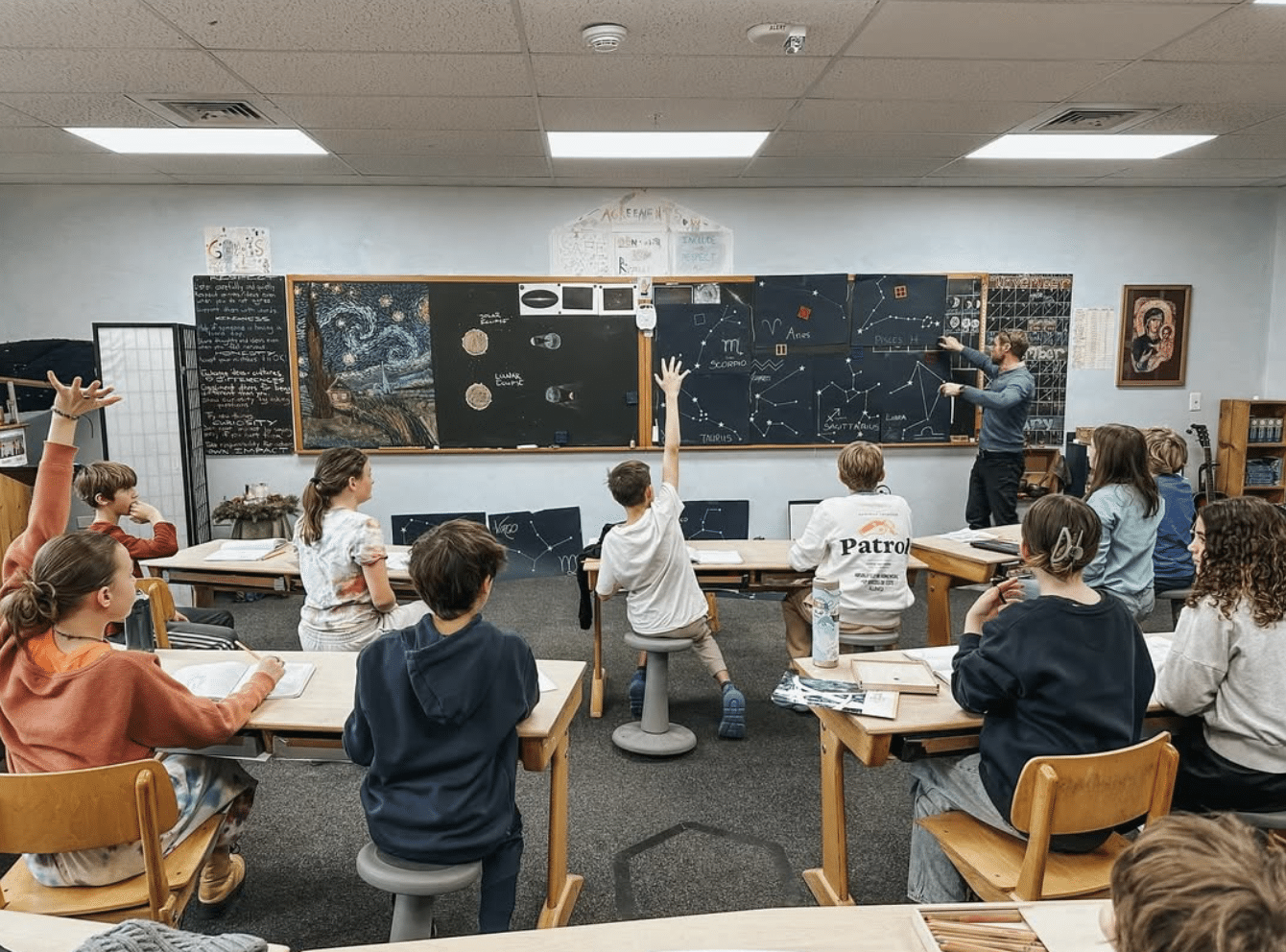
When The New York Times published research showing that teacher looping improves academic achievement and classroom outcomes, Waldorf educators responded with a resounding “well, yeah- of course!” For more than a century, Waldorf schools have practiced looping- not as a trend, but as a foundational principle of relationship-based education.
At first glance, the word “looping” might sound like a ride at Lakeside Amusement Park or a technique your child learns in Handwork class. In education, however, it refers to a teacher staying with the same group of students as they move from grade to grade. Although looping has gained media attention in recent years as schools look for ways to strengthen student connection and presence in the classroom, Waldorf schools have practiced it for more than 100 years. In some schools a teacher may stay with a class for lower grades (1-4) or middle school (5-8), while in others the journey lasts all the way through eighth grade- until the students are ready to learn from and alongside our high school educators who are experts in their respective fields.
The idea of a teacher staying with a class over a number of years was brought by Rudolf Steiner in the first Waldorf school in Stuttgart, Germany, in 1919. This practice is deeply rooted in Steiner’s philosophy, which emphasized that teachers should remain with children as long as possible, especially during the formative years between ages 7 and 14. At the heart of this idea is the belief that the most powerful educational tool is not a textbook or a test- it’s the relationship between teacher and student.
Research supports what Waldorf educators have practiced for decades: strong relationships foster stronger learning. Education is inherently adventurous- students are constantly trying new skills and stretching beyond their comfort zones. A trusted teacher provides the safe and grounding space that encourages children to take those leaps..
Traditional education often positions teachers as “content specialists”- an expert on the stage imparting knowledge- a one-way, lecture-based style. Waldorf education flips that model. Each student arrives with knowledge and curiosity, and learning happens in the collaborative space between teacher and student. Teachers are not just lecturers- they are representatives of the world, meeting students with relevant subject matter at each stage of development.
Parents often wonder how looping prepares children for high school. Some assume Waldorf’s relationship-based approach is ideal for the early grades, but worry that students need a more main stream education once they reach high school age. In reality, looping equips students with a cultivated expectation for learning through authentic relationship. By the time they reach high school, Waldorf students carry a strong sense of curiosity they can trust will be satisfied and an insistence on genuine engagement. They are not satisfied with surface-level teaching; they want teachers who are both experts in the subjects and deeply invested in who they are, in and outside of the classrooms. This expectation, that teachers understand how to bring materials to each individual learning style and the contexts that affect a students ability to lean, is part of what makes Waldorf high schools so unique.
Looping also impacts the class as a whole. Staying together year after year fosters a family-like community, with all the joys and struggles that come with it. Conflict is natural, but Waldorf schools place a strong emphasis on restorative practices and conflict resolution ensuring that children (and parents) feel supported as new families join or dynamics shift.
Of course, looping raises questions. What if a student and teacher don’t get along? What if a teacher is struggling in their class? Waldorf schools address this with intentional structures: ongoing professional development, mentorship, and honest conversations. Sometimes a teacher and class may part ways, but more often the relationship itself becomes the catalyst for growth- for both teacher and student.
The results are clear: looping works. It strengthens bonds and deepens learning, preparing students not only for academic success but for life as resilient team players.
The Denver Waldorf School Remote Learning Video
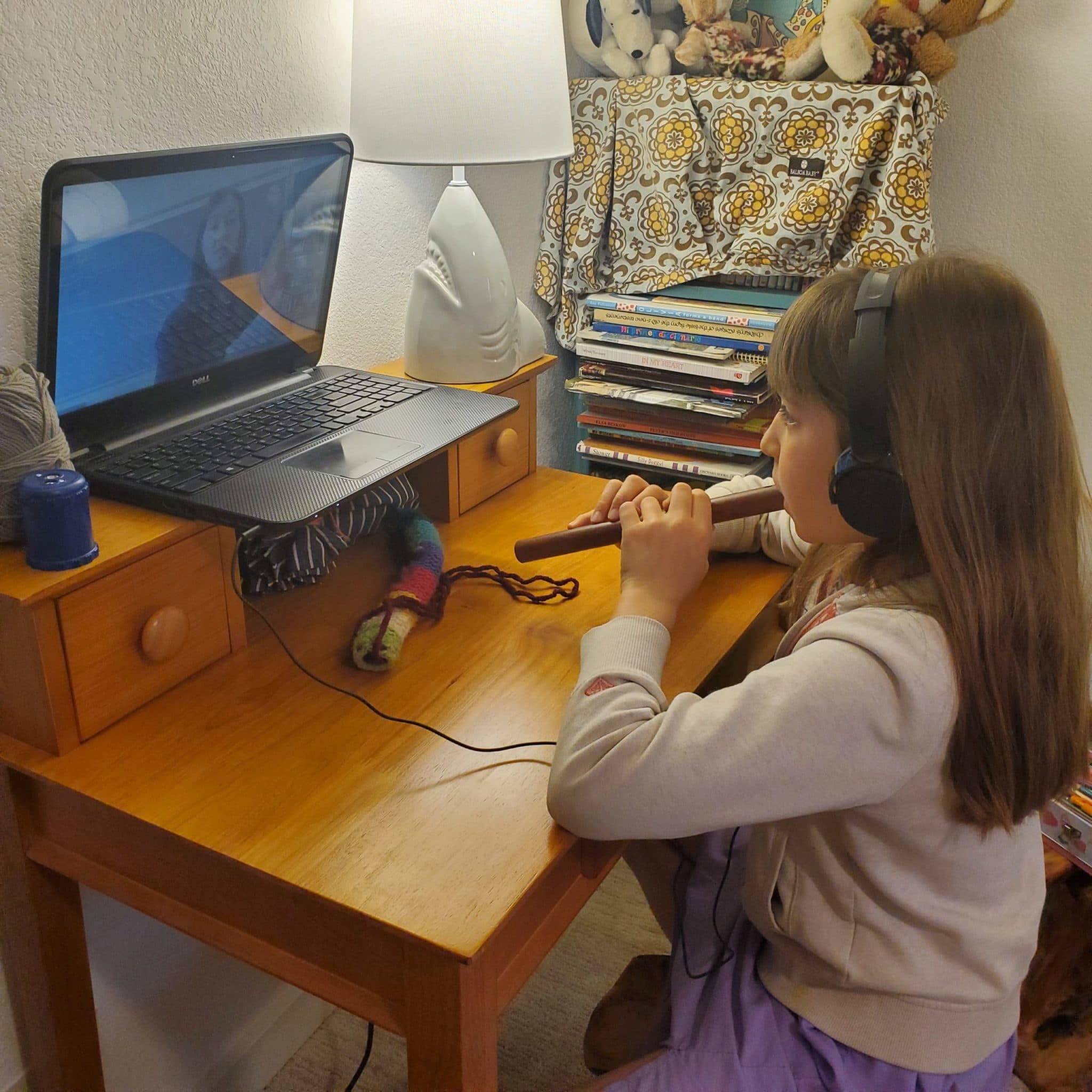
A peek into our curriculum and remote learning. We never imagined that our school would have to — temporarily — close its physical doors. Classrooms, the festival hall, the playground, the gymnasium — filled with the sound of happy and enthusiastic children — are now silent. But we are not silent. We are adaptive. We are creative. We are resilient. We are The Denver Waldorf School.